Cheng Beng Ceremony – Babi Buah Keluak

The Cheng Beng Celebration occurs on the first week of the fourth month of the lunar calendar and is akin to All Soul’s Day on the Christian calendar. The ten days before and after Cheng Beng day are spent cleaning the gravesites and mending any grave mounds. On the day itself, family members visit the grave of their loved ones, pray, light white and red candles, burn incense, and make offerings of roast pork and boiled chicken (laok sembahyang) on the grave, which later will be taken back home to be eaten. Silver paper money (kretak perak) will also be burned at the site; gold paper money (kretak mas) would be burned at the adjoining smaller tombstone that houses the datok (guardian angel) of the deceased. Green joss sticks are lit at tombstones that are less than a year old and red ones for the others and the accompanying datok’s tombstone. The ceremony lasts for an hour so that the soul of the deceased has enough time to “enjoy” the meal during the worship. To call the end of worship, two coins or divination blocks (piak puay)are tossed into the air, which, upon landing, should be showing a head and a tail. A similar custom is still observed in the Fujian Province, China, the area from which most Peranakan ancestors hail.
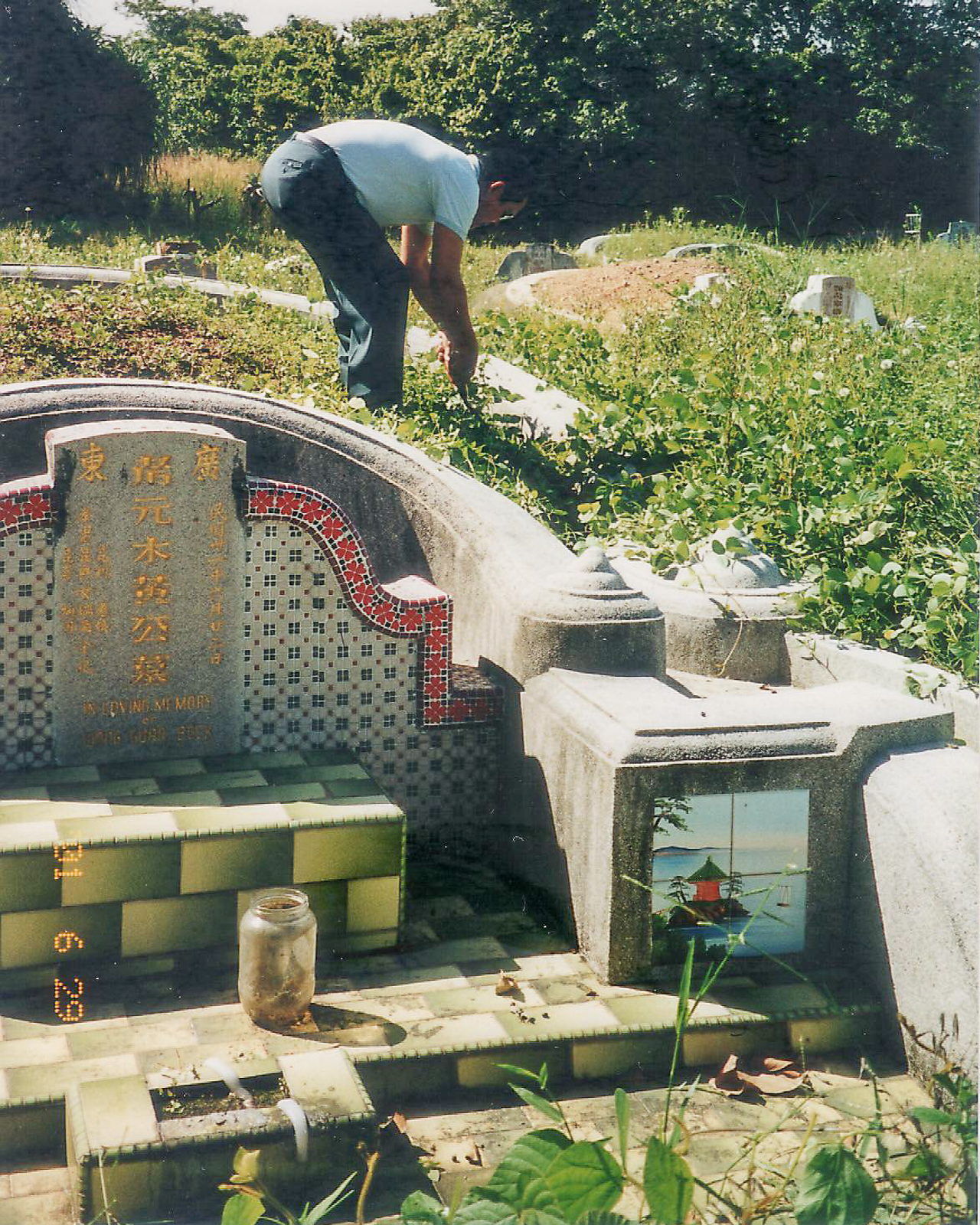
I recall following my father to his father’s gravesite in Bukit Rambai, Melaka, and walking through some thick long grass before pulling it up to clear the rust-colored soil around the gravestone. Being a Catholic, he did not burn the traditional hell notes or incense, and no food offerings were made. However, he did light candles, placed them on the tombstones, and said a prayer. Even though this occasion is not as elaborately observed as in the past, my father makes it a point to drive back to his hometown yearly to pay respects to his elders, as expected by custom. Even after my parents emigrated to Australia, they still make the effort to fly back to mark this important occasion to honor their deceased loved ones. As an honor and hommage to my ancestors, I’m publishing the below recipe that reminds me of my beloved Melaka relatives.

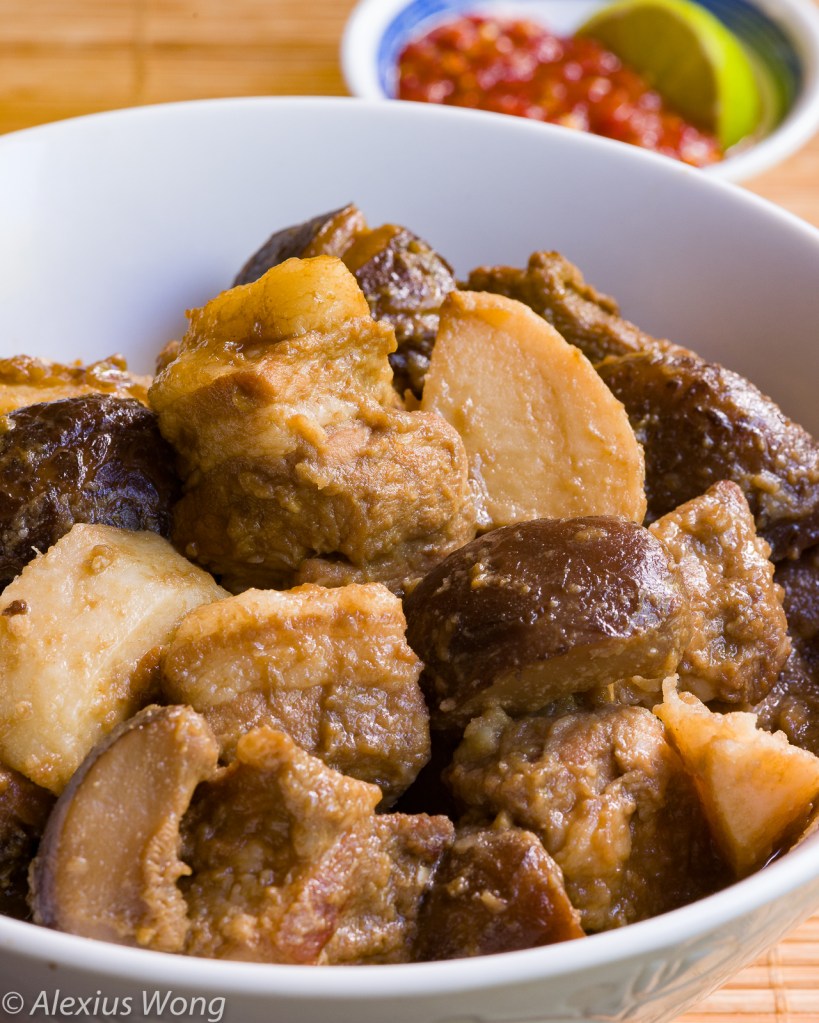
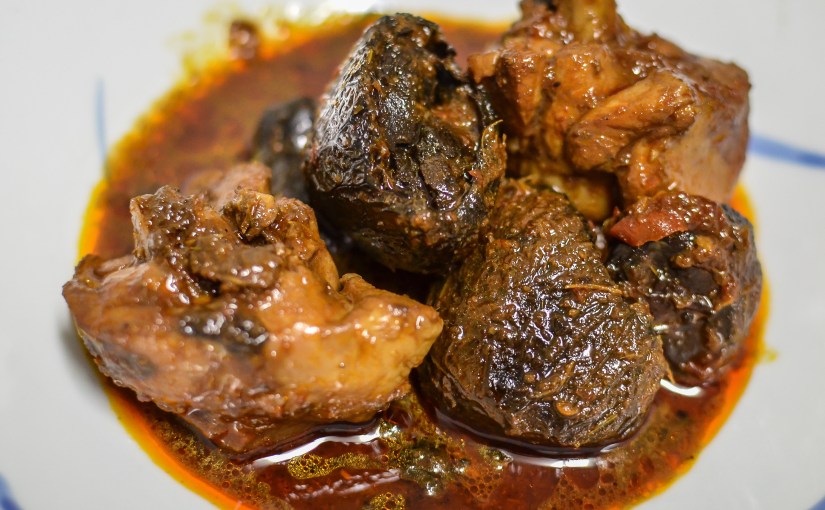
For this dish, buah keluak is a fruit seed of the kepayang tree (pangium edule) that is indigenous to Indonesia and certain parts of Malaysia. The black, odd-looking seed is also known as kluwek in Javanese. Its flesh is toxic in its raw form as it contains hydrocyanic acid (photos). To de-acidify the seeds, they are buried in volcanic ash for about forty days and later boiled to make them edible. This buah keluak dish is definitely an acquired taste, and even some Peranakans are not too fond of its bitter, dark chocolate taste and slightly slippery texture—my Chinese relatives are always perplexed by my family’s fondness for it. However, if prepared well, this hearty braised dish is absolutely delicious. The pairing of strong-flavored ingredients and spices is necessary to balance the flavor of the buah keluak. Since it has to be simmered for quite some time, pork rib is the best meat to withstand such long cooking; it also adds lots of flavor to the dish. This dish can be made with chicken thighs and drumsticks instead of pork, as it is commonly prepared that way in restaurants with a Muslim clientele.

As the seeds are seasonal, babi buah keluak is not cooked year-round, so eating it was considered a special occasion in our family. Furthermore, my grandmother would have to call down to our relatives in Melaka for them to purchase the seeds since they were, and continue to be, difficult to find anywhere else. My parents’ Indonesian maid would always return with a bagful after visiting her hometown in Java, and my mother is even able to find them vacuum-packed in the markets in Australia, her new home. A rather large pot of this delicacy would then be prepared so we could savor the dish for at least a few days.

The best way to eat buah keluak is to scoop the contents of the seed out onto the rice (our favorite method was with the back of the fork), spoon some sauce on it, add some pork rib, and top it with some spicy sambal belacan. Perhaps the reader will understand why my family loves this peculiar dish only after he or she has successfully cooked this gem of Peranakan cuisine.

Recipe from The Baba Nyonya Peranakans book

Serves 4 to 6

Soaking time: 3 to 7 days

Preparation time: 1 hour, 20 minutes

14 whole buah keluak seeds, or more to taste

5 chili bol or chile puya dried peppers, stemmed and seeded, or 1 tablespoon paste

15 small (150 grams/ 5 ounces) shallot, peeled, and chopped roughly

2 stalks lemongrass, white part only, chopped roughly

2.5 centimeters (1 inch) turmeric root, peeled, or ½ teaspoon powder

5 centimeters (2 inches) galangal root, peeled, or 1 teaspoon powder

4 pieces/10 grams (⅓ ounce) candlenuts, shelled and crushed, or macadamia or cashew (optional)

6 grams (½ teaspoon) belacan (shrimp paste)

3 Finger Hot red chili peppers, stemmed and seeded, or 1 tablespoon paste/sambal oelek

6 tablespoons vegetable oil

600 grams (1⅓ pounds) pork ribs or 400 grams (14 ounces) boneless pork belly, cut into large bite-size pieces

2 tablespoons tamarind pulp, mixed with 2 cups hot water and strained

1 teaspoon salt

½ teaspoon sugar (optional)

1. To prepare the buah keluak seeds, soak them in water for three days to one week. Once finished soaking, scrubs the shells with water to remove any dirt and rinse well. Using a broad-tipped screwdriver or pestle, break and remove the black top until the opening is wide enough to extract the seed (video). The seeds should be soft, black or dark brown, and fragrant. Discard any ones with hard, green or rotten seeds inside.

2. Put the dried chilis in a saucepan, and add enough water to cover. Boil for 5 minutes until the chilis are soft. Drain. In a food processor, purée the dried chilis until smooth. Add the shallots, lemongrass, turmeric, galangal, candlenuts, belacan, and fresh chilis. Purée until smooth. Remove.

3. In a large pot or wok on medium-high heat, heat the oil and fry the processed mixture until aromatic, about 4 minutes. Add the pork ribs and stir for about 5 minutes more. Add the buah keluak and enough tamarind water to cover the ingredients completely—add more water if necessary. Add the salt. Reduce the heat to medium-low, and cook, partially covered, for 45 minutes or until the ribs are soft. (If using chicken, remove after 30 minutes and continue to cook the seeds for 15 minutes more.) The finished gravy should be quite thick, but add a bit of water if it is getting too thick. Taste and adjust the seasoning. Sweeten with the sugar (if using). 

4. To eat buah keluak, each person uses a teaspoon or butter knife to scoop the flesh from the seeds onto the rice. Add some gravy and pork, and mix well before eating. Serve with sambal belacan (recipe).
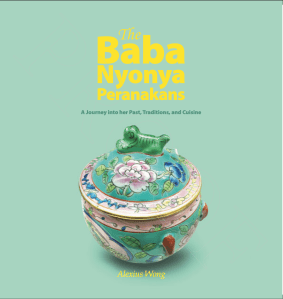
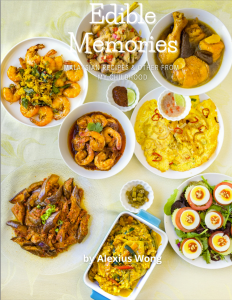
The hardcopy and e-book of The Baba Nyonya Peranakans book (1st image) and Edible Memories e-cookbook (2nd image) are available – more information on the Homepage.
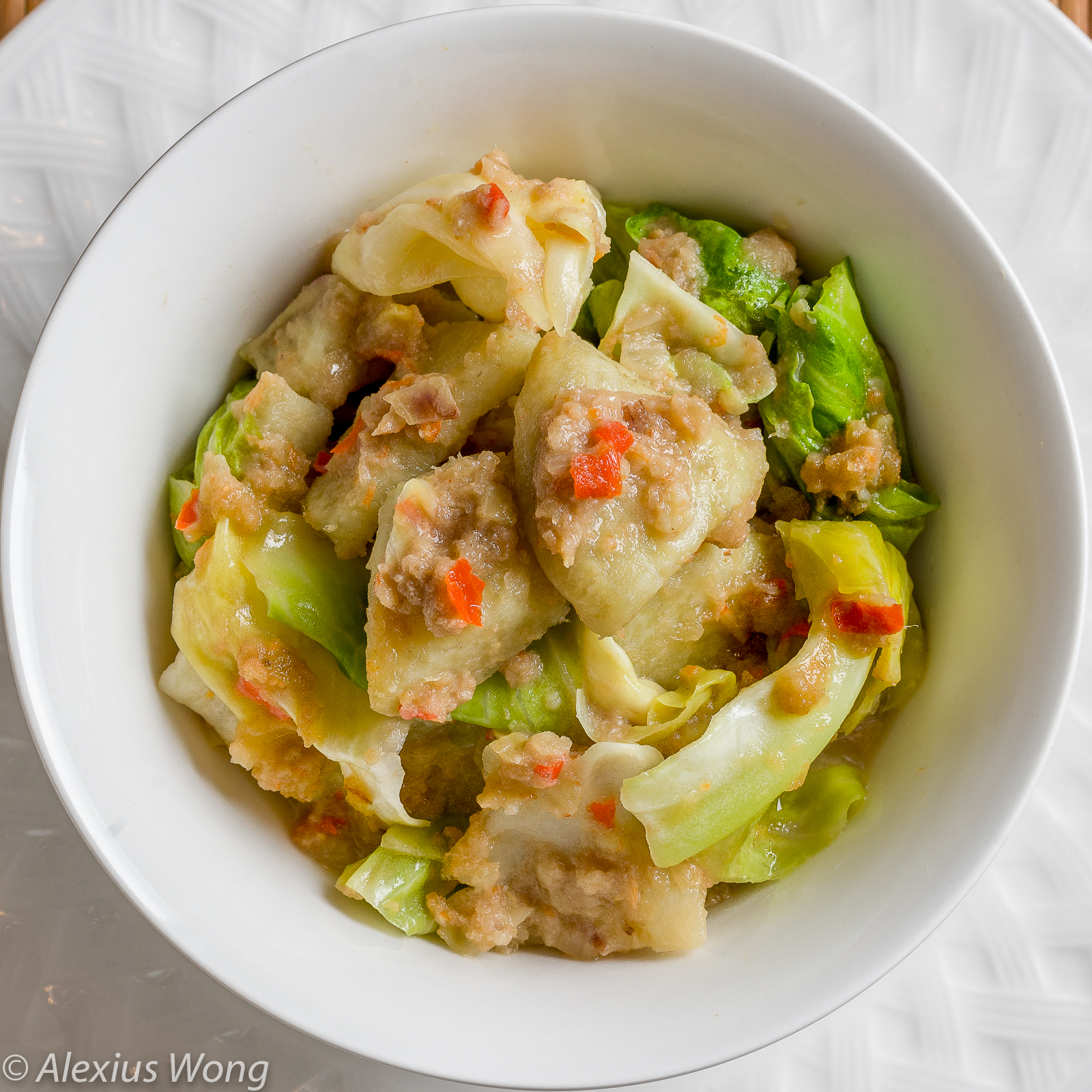
Kobis Masak Lemak Puteh

This rich dish is popular in both the Malay and Peranakan cultures of the Malacca region, and was most likely borrowed from the host culture by the Peranakans after centuries of settling in the area and assimilating various elements surrounding them. The depth of flavor in the dish is achieved by the use of the pungent belacan (shrimp paste), the spicy chili peppers, a good amount of fragrant shallots, and the slightly briny dried shrimp—all contributing to a full-flavored and complex sauce. The richness of the coconut milk is paired with the yam that absorbs all the flavors of the sauce. Every ingredient complements the others to produce this flavorful and satisfying vegetable dish.

Although this is a rather short recipe in terms of the list of ingredients and cooking process, the complex flavors in the end product belie its simplicity. Most Nyonya recipes have a rather lengthy list of steps that can be daunting to many cooks and the uninitiated to this cuisine. But here we have one that is within the reach of any cook that still provides deep flavor and gastronomic satisfaction. This recipe is a regular during many of my special dinners for my friends for the above reasons, and it is also a favorite of many of my non-Peranakan friends. Once a friend exclaimed that it tasted like soul food, perhaps alluding to how the dish hit the right spots for him. For me, a Baba Peranakan, it is one of my favorite dishes; not only is it soul stirring, it also reminds me very much of Mamah, my grandmother—simple, warm, and loving.

When preparing the dish, make sure to cut the cabbage leaves into large pieces so they stand out among the bold flavors and the yam pieces. If you cannot find yams, you may use sweet potatoes, which are sweeter than yams. Serve some sambal belacan on the side to add some more “kick” to the dish.

Having tried this recipe, you will see why this dish is a favorite with my father and his relatives who were raised in Malacca.

Recipe from The Baba Nyonya Peranakans book

Serves 4

Preparation time: 45 minutes

2 tablespoons dried shrimp, soaked in water for 10 minutes then drained

2 Finger Hot red chili peppers, stemmed and seeded, or 1 teaspoon paste/sambal oelek

6 small (60 grams/2 ounces) shallots, peeled and roughly chopped

12 grams/1 teaspoon belacan (shrimp paste)

1 cup coconut milk

1 medium (250 grams or ½ pound) Asian yam* (Malay: keledek), peeled and cut into medium-size cubes, or sweet potato

1 small white cabbage, ribs removed and each half cut into 3 or 4 wide ribbons (4 cups)

⅓ teaspoon salt

(* The standard term “yam” is known as “sweet potato” in SE Asia)

  1. In a food processor, chop the dried shrimp into fine bits. Remove and set aside. Add the chili pepper, shallots, and belacan to the processor. Purée into a smooth mixture, remove, and set aside.
  2. In a pot on medium-high heat, combine the dried shrimp, chili-shallot mixture, and the coconut milk. Bring to a boil, then lower the heat to medium-low.
  3. Add the yam, cover with a lid, and simmer for 10 to 12 minutes until partially cooked (add a bit of water if the mixture gets a bit dry).
  4. Add the cabbage and salt. Cover and cook for 5 minutes until the cabbage is just done. It is tempting to add some water at this point, but refrain from doing so as the cabbage will release some moisture as it cooks— you want to have a rather thick sauce in the final product.
  5. Remove and serve immediately with sambal belacan (recipe)

The hardcopy and e-book of The Baba Nyonya Peranakans book (1st image) and Edible Memories e-cookbook (2nd image) are available – more information on the Homepage.

Itek Tim

The Peranakans are very fond of duck, especially when it is made into this savory and sour soup. However, they believe that duck meat is very rich and frequent consumption may overwork one’s digestive system, which is why there are only a handful of duck recipes in the Peranakan culinary repertoire. Therefore, this dish was served infrequently at home but made a special appearance during certain auspicious days like Chinese New Year, the eve of a wedding, birthdays, funerals, and religious celebrations. However, due to its association with religious events, some traditional families refrain from serving it during ceremonies; I’m including it as it was my family’s tradition to do so. My Chinese relatives and houseguests would help themselves to a second serving when it was served for special dinners, relishing the wonderful flavors found in this full-bodied yet rather simple soup.

My paternal grandmother, Madam Lee Khoon Thye, was quite well known for her rendition of this dish. She was much sought after for her culinary skills both in savory dishes and desserts, a feat not achieved by many Nyonyas. Local Peranakan families would ask her to prepare the classic dishes, this duck soup included, and desserts for special occasions like weddings and special dinners. She became a master of Nyonya cooking both out of love for the cuisine and the sheer necessity of supporting her family as a single mother by selling her food products. Unlike many versions of this recipe, she kept the dish rather simple, omitting the use of other sour ingredients like the pickled plums found in other versions. The pickled mustard vegetable and the tamarind slices are sufficient enough to bring the sour element, which in turn balances out the rich duck flavor.

This recipe requires the dried slice form of tamarind (asam keping or asam gelugur) that is sometimes difficult to find outside Malaysia. However, if necessary, they may be substituted with preserved plums in vinegar and salt, but not with tamarind paste since the broth has to be quite clear. When buying the pickled mustard vegetable, buy the kind from China—not the local Malaysian one, which tends to be leafier—and preferably found in vats in Asian stores; they have fewer chemicals and preservatives.

Just before serving, a piece of fresh chili is torn into the bowl before filling it with the hot soup, adding a piquant bite that makes the soup even more irresistible. The shot of brandy added to the soup is important to mask any gamey flavor from the duck. I always insisted on adding an extra shot in the kitchen before it was brought out to the dining room. No doubt this made everyone love the soup even more! 

Recipe from The Baba Nyonya Peranakans book

Serves 4 to 6

Preparation time: 1 hour, 10 minutes

½ duck (1 kilogram or 2 pounds), skin on, washed well, jointed and breast cut into three pieces

300 grams (10½ ounces) pickled mustard vegetable (Cantonese: humm choy), leaves separated, soaked in water for 30 minutes, then drained, cut into large pieces

2.5 centimeters (1 inch) fresh ginger root, peeled and lightly crushed

12 pieces dried tamarind slices (Malay: asam keping/asam gelugur), or 9 pickled plums, lightly smashed

1 large tomato, cut into bite-size pieces

Salt

1 to 2 fresh Finger Hot red chili peppers

1 tablespoon brandy

  1. In a large pot, place the duck, the pickled mustard vegetables, ginger, tamarind slices (or pickled plums), and enough water to cover the duck. Bring to a boil. Cover and cook over medium-low heat until the meat barely falls off the bone, about 1 hour. Skim the fat off during this process.
  2. Remove the tamarind slices once the soup is sour enough to your preference. Add more slices if it is not sour enough and boil for 10 minutes more—it has to be quite sour. Add more boiling water if necessary. Add the tomato for the last 10 minutes. Season with salt if necessary, which it may not be if using pickled plums.
  3. When ready to serve, break the chili pepper(s) into the serving bowl before pouring the soup into it, then add the brandy.

The soup can be made a day ahead for a better flavor. Pork bones can be added at the same time as the duck, to add more flavor to the soup.

The hardcopy and e-book of The Baba Nyonya Peranakans book (1st image) and Edible Memories e-cookbook (2nd image) are available – more information on the Homepage.

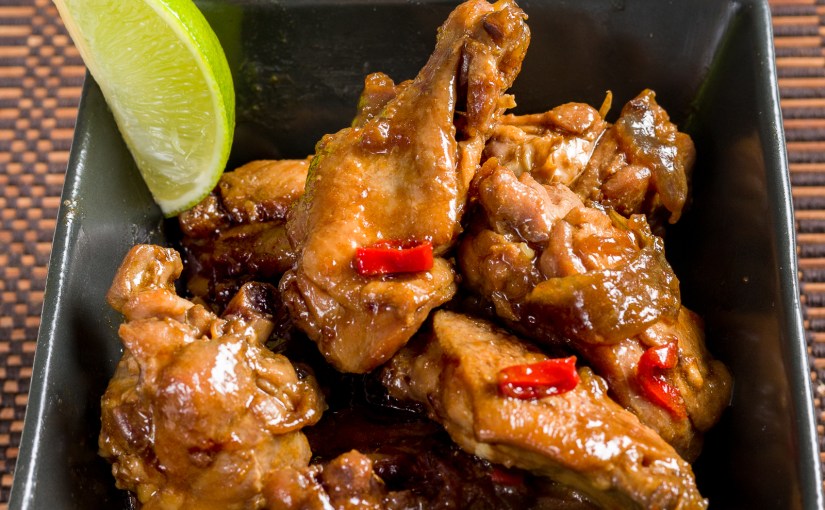
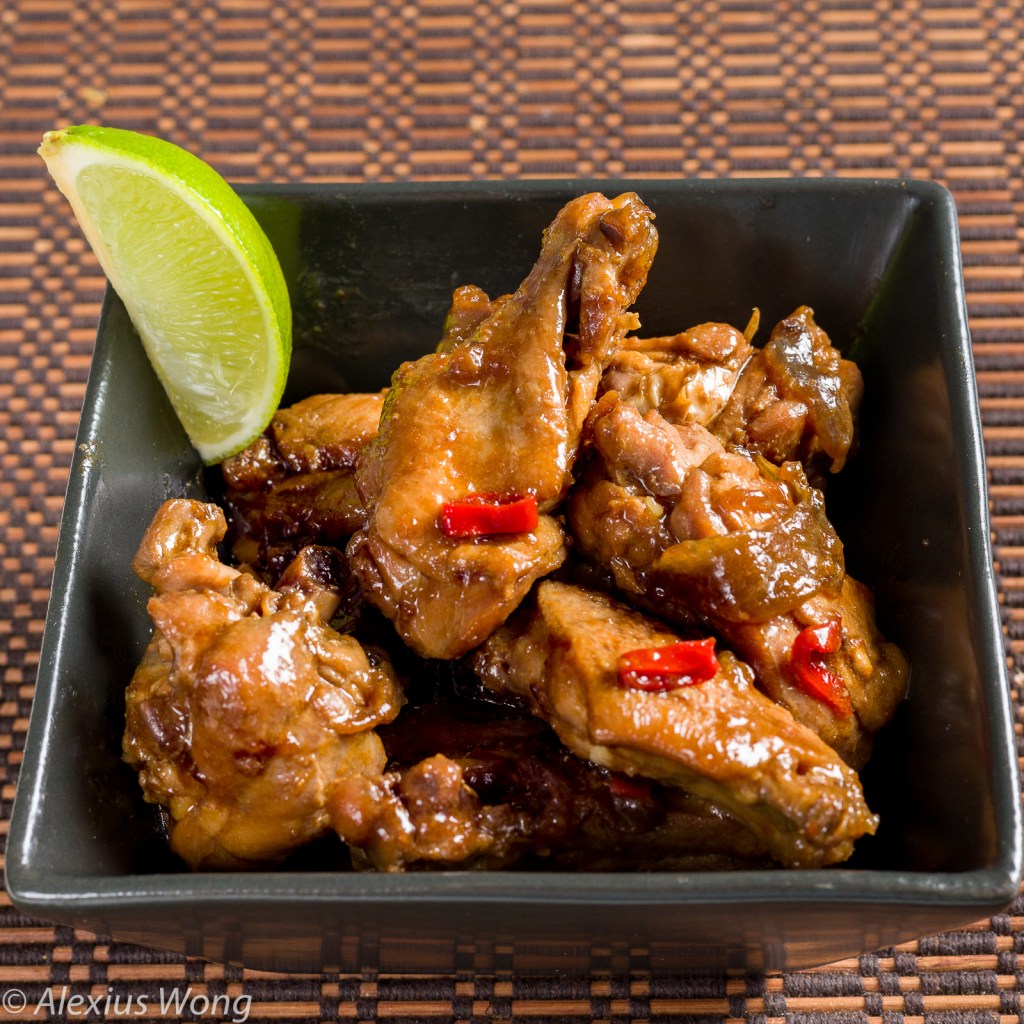
Ayam Temprah/Sambal Belacan

For many years, this dish was not a staple in my cooking repertoire as I grew up eating it only on rare occasions. It was more frequently cooked when my father and his siblings were being raised by their single mother. But while working on this recipe, I marveled at its simplicity on one hand and its profile of complex flavors on the other. Due to its simplicity and relatively quick cooking time, it was served at regular meals as well as for offerings during the anniversary of a death in which favorite dishes of the deceased were offered at the altar as a gesture to honor their loved ones.

Compared with most Nyonya dishes, this quick dish can be easily mastered by anyone. Despite the short list of ingredients, we see the Peranakan penchant for different layers of strong flavor. It is not enough for Peranakans to simply cook the chicken in plain soy sauce, since their palate always craves the heat of red chili peppers and other strongly flavored ingredients. The red onion adds a subtle sweetness that acts as the liaison between the salty soy sauce and the brightness of the lime juice. Serving it with the spicy and pungent condiment, sambal belacan, adds another dimension and complexity to the flavor profile, and is typically how it is eaten at the dinner table. 

A posting of this recipe on social media received many reactions from people who shared memories of growing up eating it but have not relished it for many years. It also revealed to me that this cooking technique is not only reserved for chicken, as the posters commented that they enjoyed variations made with fried eggs, fish, eggplant, and even cripsy fried ikan bilis or dried Asian anchovies. It is indeed a versatile sauce that is highly favored among the Peranakans due to its many flavor elements.

Once you have tried this recipe, you may marvel at how wonderful and satisfying it is. It has become a weekly staple for me and also for some of my relatives who are always pinched for time in the kitchen. After a taste of this, you will understand why the Peranakans, both living and deceased, are so fond of this chicken recipe.

Recipe from The Baba Nyonya Peranakans book

Serves 4 to 6

Preparation time: 50 minutes

3 tablespoons vegetable oil

1 very large (400 grams/14 ounces) red onion, peeled and cut into medium-size vertical slices

2 Finger Hot red chili peppers, seeded and sliced not too finely, or 1 tablespoon Sambal Oelek

4 chicken thighs with drumsticks, or 8 drumsticks, cut into bite-size pieces

1½ teaspoons thick dark soy sauce

5 tablespoons thin soy sauce

1½ cups water

2 tablespoons lime juice

  1. In a pan on medium-high heat, heat the oil and cook the onion and chili until quite soft, about 4 minutes. Add the chicken pieces and cook for 5 minutes more until no longer pink. Add the dark and light soy sauces and the water. Reduce the heat to medium. Simmer with the lid of the pan ajar for 15 minutes, stirring every few minutes.
  2. Remove the lid, reduce the heat to medium-low, and cook for 15 minutes more while stirring occasionally, to let the sauce reduce—add a bit of water if it reduces too quickly. Taste and adjust the seasoning with light soy sauce. You may remove excess grease from the sauce.
  3. Add the lime juice just before serving and stir well. Serve with sambal belacan with lime juice added to it.

Sambal Belacan

6 grams/½ teaspoon belacan (shrimp paste), toasted and ground

6 Finger Hot red chili peppers, stemmed and seeded, or 2 tablespoons paste/sambal oelek

Salt

1 teaspoon lime juice, preferably from Kalamansi lime

  1. If using belacan paste, spoon it onto a piece of aluminum foil, fold it until well sealed, and bake in a toaster oven on 350°F for 5 minutes or until aromatic. If you are using a belacan square, toast it over an open fire until aromatic. Take it outside to cool and to keep the strong smell out of the house.
  2. In a food processor, purée the chilis with the belacan to a smooth paste. Add salt to taste. 
  3. Serve by squeezing the lime juice into it.

If using wet shrimp paste and sambal oelek:

Put the shrimp paste in a bowl and squeeze a bit of lime juice on it. With the back of the spoon, press the paste into the juice until the mixture is well incorporated. Add the sambal oelek and mix well.  Finish with more lime juice and mix well.

The hardcopy and e-book of The Baba Nyonya Peranakans book (1st image) and Edible Memories e-cookbook (2nd image) are available – more information on the Homepage.
Bubur Pulut Hitam

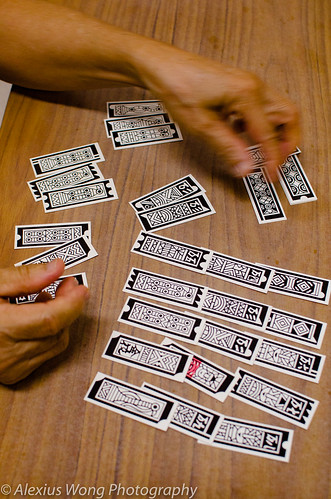
Peranakan Cherki Cards

A Peranakan’s call to guests for this dish during an afternoon’s card or mahjong game would rarely get a negative response, and it was usually enough to bring the entertainment to a complete halt. Furthermore, my family members could also be found in the kitchen eating this rather rich dessert in the middle of the night—albeit refrigerated—especially my mother who is very fond of it.  (Photo – Cherki card game, a past Peranakan favorite)

Peranakan Diningware

Customarily, this kind of dessert was served in special Peranakan porcelain that was hand painted with bright pink, green, blue, and yellow colors, all considered too garish by the mainland Chinese. These dainty items were made in Jingdezhen, Jiangxi Province, China and exported to Southeast Asia for the Peranakans’ exclusive use. A few years back, I visited my cousin who resides in London. Above her stove were two small plates, and upon inspection, I vaguely recognized them. I asked her if they were Peranakan porcelain, and she confirmed that they belonged to our common grandmother. I marveled at the intricacy of the brightly colored peonies and phoenixes in the center, surrounded by a bold red scalloped lip, as well as the fine brush strokes, all hand-produced. One of the plates showed some wear and tear, indicative of its use for daily meals. I took a few photographs of them, and upon returning home, I enlarged them to show the fine details, and they now are proudly displayed in my dining room. I once asked my parents if they still had any Peranakan porcelain among their valuables, to which they replied that they threw them out once they moved to a new house, thinking that they were outdated and not valuable—one shudders to think what they could be valued at these days. However, since then, my parents have started acquiring some of these precious plates, which are carefully stored in a beautiful red lacquered and gilded armoire.

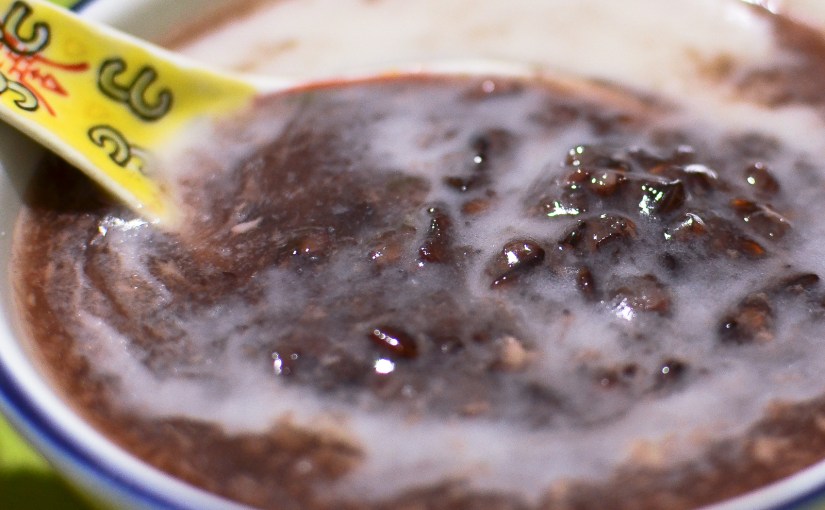
Instead of using regular polished white rice to make this sweet pudding, black glutinous rice is the main ingredient and starch of this unique recipe. It has a nuttier flavor, and the outer hull gives it a unique texture. It has to be boiled much longer than regular rice so the starch is fully cooked and the hull becomes soft in texture. This grain is a full-flavored ingredient, thus the list of the other ingredients is short. The addition of the coconut cream just before serving gives it a burst of richness that complements the chewy rice and the thick sweet soup. It can be served warm or chilled. 

You can find black glutinous rice in Asian markets. Do not buy the wild rice found in regular markets.

Recipe from The Baba Nyonya Peranakans book

8 to 10 servings

Preparation time: 1 hour

240 grams (8½ ounces) black glutinous rice (Malay: pulut hitam), washed and drained, and soaked in water overnight

2 pandan leaves, folded and knotted

7 cups water

½ cup plus 2 tablespoons sugar

½ teaspoon salt, plus a pinch

½ coconut, shaved and squeezed to produce ½ cup coconut cream, or canned

  1. In a pot, combine the rice, pandan leaves, and water, and bring to a boil. Cover, reduce the heat to low, and simmer for 45 minutes until the rice is nearly completely cooked but not yet mushy.
  2. Add the sugar and ½ teaspoon of salt, and simmer for 10 minutes more. Remove from the heat when the rice hulls are soft enough.
  3. In a saucepan, bring the coconut cream and the pinch of salt to a quick simmer, then turn the heat off. Let it cool.
  4. Serve warm or chilled, with a bit of coconut cream added to each bowl before serving.
  5. The mixture may thicken as it cools. If necessary, add some boiling water until a slightly thick consistency is achieved, and adjust the sugar and salt to taste.

The hardcopy and e-book of The Baba Nyonya Peranakans book (1st image) and Edible Memories e-cookbook (2nd image) are available – more information on the Homepage.
Chap Chai Melaka

Disclaimer: This is my grandmother’s version which is atypical to the fermented soybean version commonly found in Melaka/Malacca.

This recipe is basically Chinese in nature, mostly made up of Chinese ingredients that are not indigenous to Southeast Asia. However, the early Peranakan ancestors adapted this daily staple with the addition of local Southeast Asian spice ingredients such as dried shrimp, briny pungent belacan (shrimp paste), candlenuts, shallots, and red chilis—spices typically found in Nyonya dishes. This is also a popular dish in Medan, Sumatra, and Semarang, Java where the largest concentration of Indonesian Peranakans reside today. Surprisingly, I have found a non-spicy version of similar name in Korean restaurants, pointing to its Far East Asian roots.

The original name is Hokkien (Fujianese) for “mixed vegetables.” In this fairly simple dish you can taste the individual ingredients that complement each other: sweet cabbage, silky black or cloud fungus, woodsy lily bud, chewy tofu skin, and slippery bean thread noodles that have absorbed the rich sauce flavors. Most of the dried ingredients are imported from China and can be found in Oriental markets. Make sure to use the tender parts of the cabbage and to cut it into rather wide long ribbons so they do not disintegrate in this wonderfully satisfying and full-flavored vegetable dish. 

A milder Chinese version was usually served in our household, especially during special occasions (Chinese New Year in particular due to its vegetarian nature) and birthdays. However, this Peranakan version is equally delectable with its spicier, more pungent flavors and was usually present at our everyday dinners. My father recalls eating this dish often as a child, prepared by his mother. My maternal grandmother usually cooked the milder version, since she grew up in a Cantonese environment before her arranged marriage to a Baba Peranakan from the Malacca region. The addition of stronger tropical flavor elements to the Chinese recipe is indicative of the fusion of Chinese and Southeast Asian culinary traditions, a true reflection of Nyonya food itself. 

A recent recreation of this dish was a mind-opening revelation for me. For the longest time my memory of this dish was very sketchy, and I had a difficult time recalling the flavors. When I took the first bite of my attempt to recreate it, a stream of nostalgia rushed in with the recollection of the familiar flavors, and a comforting feeling of family, especially my paternal grandmother, Mamah. I remembered with sorrow that the last time I had savored this bowl of “lost memory” was when she passed away more than thirty years before. Just like the Bi Tai Bak and Spicy Chicken Gizzard and Pork Salad recipes, this dish could have easily slipped into oblivion, taking away with it a nugget of memory of my growing up as a Peranakan. But now, I cherish this recipe with a certain sense of zeal, knowing that not only is it a wonderfully delectable dish but also one that was saved and brought back into my consciousness and culinary repertoire.

Recipe from The Baba Nyonya Peranakans book

Serves 4

Preparation time: 30 minutes

Cooking time: 15 minutes

⅔ cup dried black or cloud fungus

2 tablespoons dried shrimp, soaked in water for 10 minutes, drained

6 grams/½ teaspoon belacan (shrimp paste)

3 candlenuts, shelled and crushed, or cashew or macadamia nuts (optional)

5 small (50 grams/1¾ ounces) shallot, peeled

4 cloves garlic, chopped fine (1 tablespoon minced)

2 Finger Hot red chili peppers, stemmed and seeded, or 1 teaspoon paste/sambal oelek

4 tablespoons vegetable oil

½ cup dried lily bud (Cantonese: kim chan), soaked, hard tip removed, and tied into a knot

1 piece curled tofu skin (Cantonese: foo chook), rinsed until pliable and cut into 5-centimeter (2-inch) pieces

4 cups white cabbage, ribs removed if tough, cut into 1-inch (2.5-centimeter) wide by 4-inch (10- centimeter) long strips

1 cup water

1 teaspoon thin soy sauce

¾ teaspoon salt

1 handful bean thread or glass noodles, soaked in cold water until soft, drained

  1. Soak the dried black/cloud fungus and lily bud separately in hot water for 30 minutes. While waiting, prepare the rest of the ingredients. When the fungus is finished soaking and is soft, divide each cluster into bite-size pieces and discard any hard pieces. With the lily bud, pinch off the hard end, and tie into a knot.
  2. In a food processor, pulse the soaked dried shrimp until quite fine. Remove and set aside.
  3. To the processor, add the belacan, candlenuts, shallots, garlic and chilis, and purée into a fine paste. Remove, mix with the dried shrimp, and set aside.
  4. In a pan on medium-high heat, heat the oil. Fry the spice paste and dried shrimp until aromatic, 2 to 3 minutes. Add the fungus, lily bud, and tofu skin, and stir for 1 minute. Add the cabbage, breaking it into loose leaves. Add the water, soy sauce, and salt. Cover with a lid and bring to a simmer.
  5. When the sauce is simmering, remove the lid and cook until the cabbage is tender but not too soft, about 5 minutes. When cooked, add the bean thread noodles to the sauce and stir for 10 seconds only. Taste and adjust the seasoning. Serve immediately.

The hardcopy and e-book of The Baba Nyonya Peranakans book (1st image) and Edible Memories e-cookbook (2nd image) are available – more information on the Homepage.
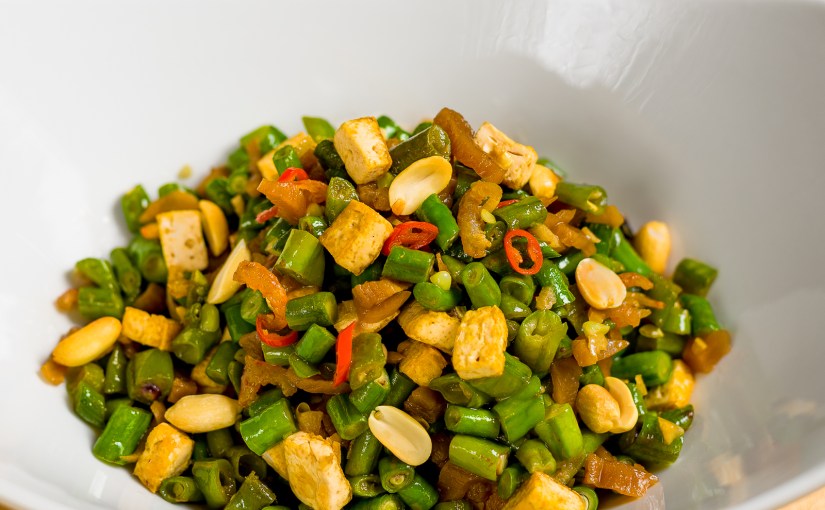
Kacang Panjang Chai Po

This rather simple dish is one of my family’s favorites, and it packs in a lot of flavor: the salty dried radish, the spicy red chili, the slightly fishy dried shrimp, the nutty and crunchy peanuts, all ingredients that are paired with the mild flavored tofu bits and Long Bean. This is a typical manner in which the Nyonya cook will treat a simple vegetable by adding a myriad of complementary and contrasting spice and flavorful elements, as exemplified by this vegetable dish.

A recent posting of this recipe in a Baba Nyonya recipe group garnished a lot of attention and comments, especially for a simple vegetable dish. Interestingly, many members stated that they had not relished it since their early days, and they reminisced that it was last cooked by either their mother or grandmother. Most commented that it was fondly eaten with plain rice porridge, an indication of the dish’s humble and soul-evoking nature that this dish conjures for the various posters. A reader enlightened me that the dish is known as “Chau Lup Lup” in Cantonese referring to the ingredients cut into small bits, and “Au Boh Tok” in Hokkien to stepmothers who were mean to stepchildren by forcing them to eat less of this dish and more of rice as the result of their struggling eating the finely-chopped dish with chopsticks.

When you are choosing Long Beans, pick the ones that are deep green in color, fresh looking, and not wilted. They are very perishable, and so, use them are soon as you can.  If the peanuts are quite large, chop them up or break them into halves. You can find packs of brownish Dried Radish in Asian Markets – get those in whole form and not the chopped-up ones, and you will have to soak it in hot water if it is too salty. Try making this dish, and you will see why it has been become a hit with my friends.  

You may use Green Beans as a substitute for the Long Beans. I like to slice them very finely on the diagonal for a nice presentation.

Recipe from Edible Memories e-cookbook

Serves 4

Prep time: 15 minutes

Cooking time: 15 minutes

¼ cup tofu, firm type (Cantonese: taukwa), and finely cubed 

½ cup vegetable oil

2 cloves garlic, peeled and chopped (½ tablespoon minced)

1 large piece salted dried radish (Cantonese: Choy Po), finely diced (¼ cup pressed), soaked in hot water 15 minutes or more until not too salty, drained. 

1½ tablespoon dried shrimp, very small, soaked 10 minutes in water and drained

200 grams Long/Snake Beans or Kacang Panjang, sliced ¼-inch (½-cm)

1 Finger Hot red chili pepper, stemmed and deseeded, sliced horizontally then finely sliced 

Thin soy sauce

2 tablespoons peanuts, toasted, peeled, and split

In a wok on medium-high flame, pour ½ cup oil and stir fry the tofu cubes until golden brown. Remove and drain well. Set aside.

Remove the oil and leave behind 3 tablespoons oil in pan. Add the garlic and fry for 1 minute or until slightly golden brown. Add the dried radish and dried shrimp, and stir-fry for 1 minute. Add the Long Beans and chili and stir-fry for 1 minute.  Add 4 tablespoon of water and 1 teaspoon soy sauce. Stir-fry uncovered for 1 minute. 

Taste the seasoning. If it is not salty enough, add a bit more soy sauce to taste. Add tofu and stir-fry uncovered for 1 more minute until mixture is quite dry but not completely dry.

Pour cooked mixture onto a plate, and sprinkle peanuts on top before serving.

The hardcopy and e-book of The Baba Nyonya Peranakans book (1st image) and Edible Memories e-cookbook (2nd image) are available – more information on the Homepage.

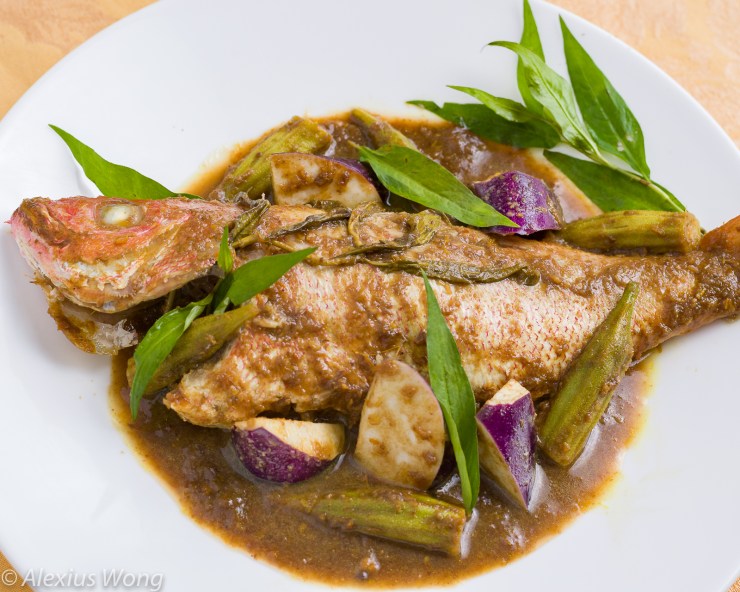
Gerang Asam Ikan

This fish stew is one of the quintessential Peranakan dishes that reflects the flavors that make Nyonya cuisine unique: sour, salty, spicy, and fragrant. Seafood is a staple in Peranakan cuisine as the Straits Settlements were seaside communities. Since this fish dish is a mainstay found in many Peranakan restaurants, it is perhaps one of the most recognized dishes, but I have to admit that I am always a bit disappointed by their renditions; the tendency to add bunga kantan (wild ginger flower) attests that there can be too much of a good thing because it overpowers the light minty fragrance of the delicate daun kesum. During earlier days, bunga kantan was seasonal and thus not easily available, unlike nowadays. This herb was rarely added to the dish due to its price, making it too impractical and cost prohibitive for an often-served dish. To me, simplicity is best in this dish, just as it was served weekly in our household.

Its name in Baba Melayu can be confusing to some who are familiar with this dish. Many know it as Asam Pedas. But a fellow Baba on a Facebook group pointed out that Asam Pedas is the Malay version, which has a lighter and less fragrant sauce than the Nyonya version that is made with more root spice ingredients, hence making it more flavorful; this name confusion was also clarified by my Malacca cousin. So, in maintaining fidelity and authenticity, I have written down the dish’s true name.

Fresh fish works best in this dish, and it should be cooked whole or in large slices to seal in the moisture. You can use a mild-flavored medium-firm fish, like red snapper, tilapia, skate wing, or sea bass, but avoid oily or earthy-flavored fish like salmon and mackerel. You may find the various spice roots in the frozen section of Asian markets. The essential herb daun kesum or laksa leaves (photo) is also known as rau ram or “Vietnamese mint” and can be easily found in Vietnamese grocery and some Asian markets.

A true Peranakan meal would not be complete without Gerang Asam Ikan. As experts in preparing this dish, my grandmothers would only serve it when the fish from the open market was very fresh. Instinctively, they knew exactly how to produce the perfect balance of flavors and spices to complement the sea sweetness of the fish that plays the starring role. The skill needed to cook this dish perfectly was a true litmus test for a Nyonya. How the fish was poached and the vegetables cooked was a tall order for a lady to prove her worth to her family sitting around the dinner table. But a perfect rendition of this dish would speak volumes to the diner’s heart and meet one’s gastronomic approval, which in turn would bring joy to the cook herself.

Recipe from The Baba Nyonya Peranakans book

Serves 4 to 6

Preparation time: 50 minutes

5 chili boh or Kashmiri dried peppers, or chile puya, stemmed and seeded, or 1 tablespoon paste

1.5 centimeters (½ inch) turmeric root, peeled, or ¼ teaspoon powder

1.5 centimeters (½ inch) galangal root, peeled, or ¼ teaspoon powder

6 grams/½ teaspoon belacan (shrimp paste)

10 small (100 grams/ 3½ ounces) shallots, peeled and roughly chopped

1 lemongrass stalk, white part only, roughly chopped

3 candlenuts, shelled and crushed, or cashew or macadamia nuts (optional)

3 tablespoons vegetable oil

2 tablespoons unseeded tamarind paste, mixed well with 3 cups hot water and strained to remove pulp

½ teaspoon salt

1 teaspoon sugar (optional)

2 sprigs daun kesum or laksa leaves or Vietnamese mint (rau ram), plus more for garnish

2 medium Asian eggplants, cut into medium-size wedges

7 to 10 small whole okra (ladies fingers), stemmed

600 grams (1¼ pound) whole or thick fillets of threadfin fish (ikan kurau), cleaned, or any mild fish 

  1. Pour enough hot water on dried chilis to cover and soak until they are soft. Drain. Process them in a food processor to a fine paste. Add the turmeric, galangal, belacan, shallots, lemongrass, and candlenuts. Process to a fine paste. Remove and set aside.
  2. In a pot on medium-high heat, heat the oil. Fry the spice paste for 4 to 5 minutes until very aromatic but not browned. Add the tamarind water and bring to a boil. Taste and adjust the seasoning with more chili paste if not spicy enough. Add the salt and sugar (if using), or to taste—sugar is not necessary if the tamarind is sweet. Add the daun kesum, lower the heat to medium low, cover the pot with a lid, and simmer gently for 10 minutes. 
  3. Raise the heat to medium high. Add the eggplant and simmer for 3 minutes until barely cooked. Add the okra and fish. Cover with the lid, lower the flame, and simmer gently until the fish is just cooked, about 3 minutes. Add a bit of water if the sauce is too thick. Taste and adjust the seasoning with salt and sugar if necessary.
  4. Remove and garnish with a few fresh daun kesum leaves on top of the fish. Serve immediately.

The hardcopy and e-book of The Baba Nyonya Peranakans book (1st image) and Edible Memories e-cookbook (2nd image) are available – more information on the Homepage.
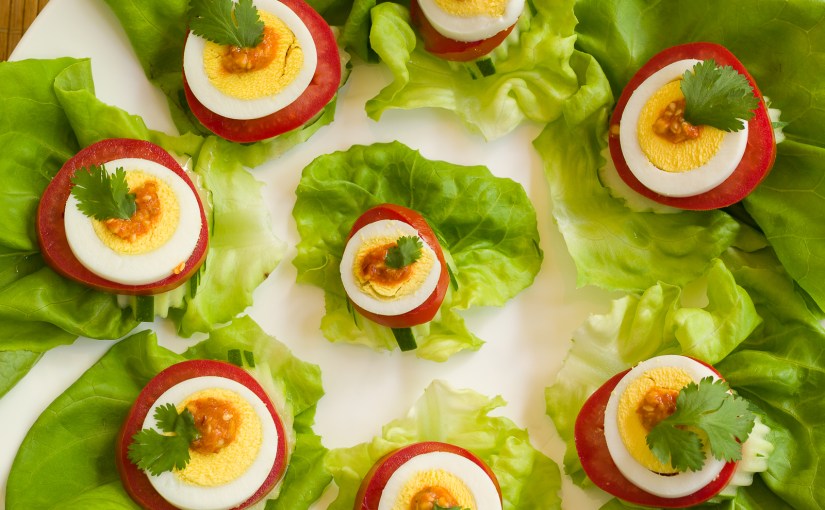
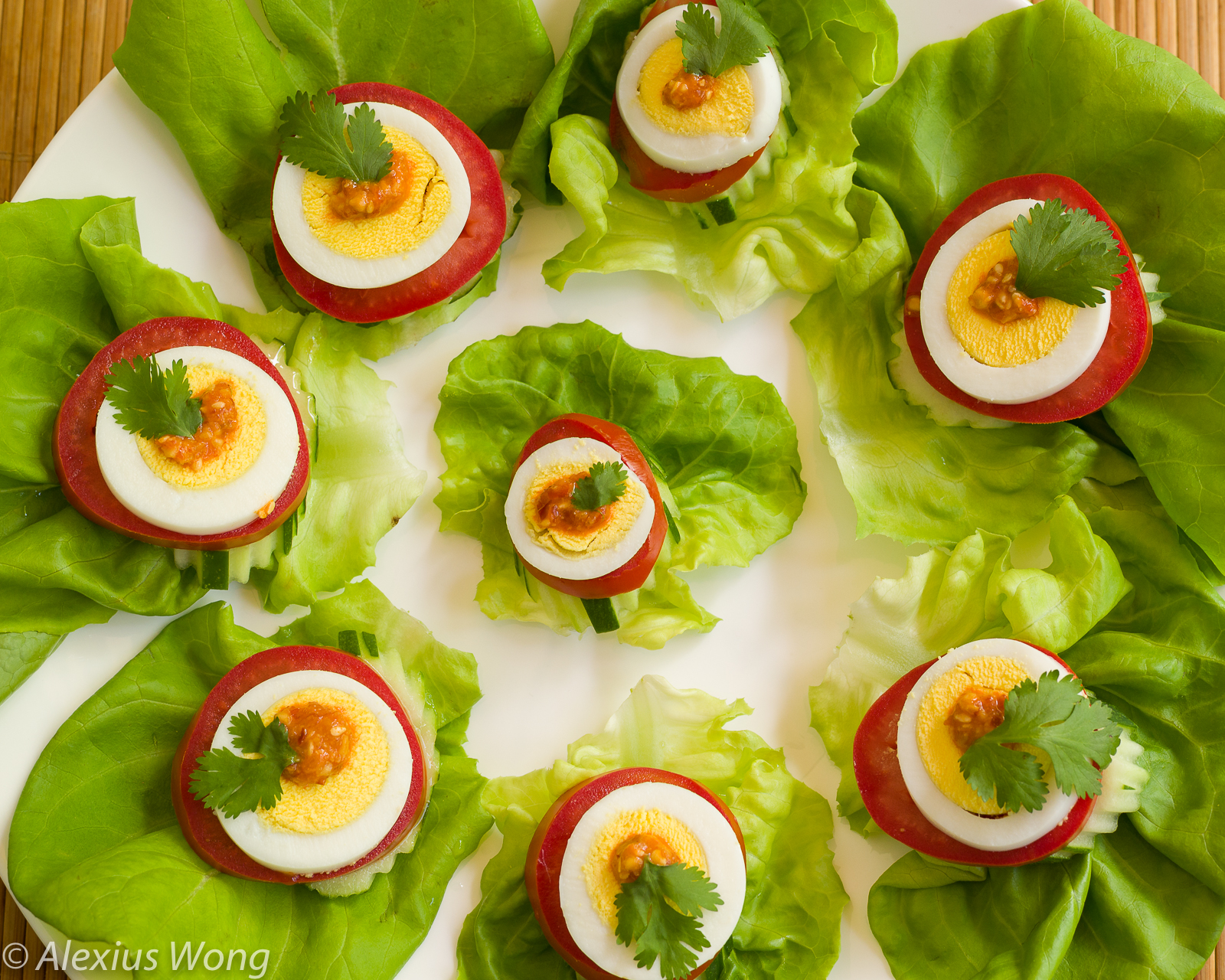
Nyonya Salad

Have you eaten so much for Chinese New Year that you feel jelak or overindulged? Here is a salad dish that is light but not short of flavor, like all Nyonya dishes (however not necessarily light sometimes).

A simple salad can be found in many cuisines, but the difference in this recipe lies in the sauce and the combination of ingredients. Just like the bedak sejuk, the rice powder cooling facial paste worn by Nyonyas and children (I still remember this on my face), this salad is cooling and refreshing, and it pairs very well with many spicy dishes. However, the Peranakans are unable to omit a quintessential element from their diet, thus the inclusion of chili in this dish.

In Nyonya cuisine, salads or cold dishes are never eaten separately as a course; they are integrated as part of the whole meal. However, you can serve it any way you choose. The crispy lettuce and cucumber slices contrast pleasingly with the softer tomato and egg slices. The pieces of peanut in the spicy sauce add a further textural element with their crunchiness. Although this is a very simple dish to prepare, it immediately commands attention from the diner due to the bold and wonderful flavors found in the sauce, which surprisingly seem to complement the mild fresh vegetables. Mamah made this dish often when she felt it was time to add some variety to our large dinners and to include a lighter dish in the meal, especially after days of consuming richly sauced dishes. As usual, she would call me into the kitchen at the very last moment, asking me to check the balance of sweet, sour, and salty in the sauce before pouring it on the salad. 

You may want to make the presentation a bit fancier by folding the lettuce into large squares or using a small-leaf lettuce in order to place the cut vegetables and egg slices on top of it. Spoon the sauce on the salad only just before serving it, otherwise the lettuce will turn soggy. 

Recipe from The Baba Nyonya Peranakans book

½ head green leaf or 1 head Boston or Bibb lettuce, washed and drained well

1 medium cucumber, peeled and cut into quite thin coins

1 large tomato, cut into round slices, or to fit

2 eggs, hardboiled, peeled and thinly sliced

1 tablespoon chili cuka (link) or sambal oelek

5 tablespoons rice vinegar

¼ teaspoon salt

50 grams (1¾ ounces) Chinese peanut-and-sesame brittle (or 3 tablespoons roasted peeled peanuts, ½ teaspoon toasted sesame seed, and ½ teaspoon sugar), crushed but not too finely

Sugar (optional)

  1. Tear the lettuce into fairly large pieces onto a plate (they can be folded into large squares). Place a slice of cucumber, followed by a slice of tomato, and finally an egg slice in a stack on each piece of lettuce.
  2. Mix the chili cuka with the rice vinegar, salt, and the crushed peanut brittle. Add some sugar to the sauce if it is too spicy—the sauce should already be a bit sweet from the peanut brittle. (This sauce can be substituted with Thai sweet chili sauce mixed with some crushed peanuts.)
  3. Pour the sauce onto the salad just before serving.

The hardcopy and e-book of The Baba Nyonya Peranakans book (1st image) and Edible Memories e-cookbook (2nd image) are available – more information on the Homepage.

Pongteh

If there were one dish that could be representative of Nyonya cooking from the Malacca Peranakan community, it would be this wonderful, hearty, and flavorful stew. Here we see the Peranakan penchant for using pork belly, as in many other pork dishes, paired with potatoes and Chinese mushrooms, cooked in Chinese salty bean sauce, and served with the spicy and pungent condiment, sambal belacan.

When I was writing this recipe, my aunt Madam Dolly Lee Kim Neo reminisced that instead of potatoes in the version that I was accustomed to, Mamah used to cook it with bamboo shoots when Auntie Dolly was a child. I did not quite believe her at first since I could only recall eating the dish with wedges of potato in it. One day, my father gave me a small cookbook from Singapore on Nyonya cuisine. The Singapore Peranakan culture is an extension of the Malacca prototype since many from Malacca migrated to the southern island when it became a trading port. In that cookbook, there was a recipe for pongteh, and, lo and behold, it was made with bamboo shoots. The same auntie also told me that it was my maternal grandmother, Madam Leong Yoke Fong, and not my paternal grandmother (her mother), who introduced Chinese mushrooms to the dish. Later on, I found out from my cousin Moses that this same grandmother occasionally would also add sengkuang (jicama) and white peppercorns to her version. The original recipe most likely would have used bamboo shoots since bamboo trees grew abundantly in the countryside. In addition, Chinese mushrooms had to be imported and were considered a luxury item, only used by city folk or wealthier Peranakan families. My maternal grandmother, who was raised in the Chinese culture, married into a fairly wealthy Peranakan family in Alor Gajah, which explains her addition of this expensive ingredient to the dish.

The amount of shallots and garlic seems excessive, but they are essential to providing a rich flavor as well as the thickening agent for the sauce. An important tip is to fry the potato wedges quickly in hot oil until a golden-brown crust forms so the potato does not fall apart in the stew, otherwise it will make the sauce mealy in texture. Another is not to cook the potatoes in the stew for too long—you may remove them once they are done. The Dutch most likely introduced the potato to the Malay Peninsula since they were cultivating it in the Philippines during the late sixteenth century, and by the seventeenth century in Java. It was around that time that the Dutch entered and controlled Malacca. You may add some sugar to make the sauce slightly sweet, but my family has an aversion for sugar in our savory dishes.

When I used to visit my aunt Madam Nancy Guan in Bukit Rambai, seven miles north of Melaka town, she would always prepare this dish for us with a customary layer of pork fat shimmering on the surface. My siblings and I would relish the rare opportunity to eat it Malay-style, with our fingers, to my father’s slight disapproval; here, her seniority trumped his preference. It was amazing how she could whip up a Peranakan feast for us even when we paid a surprise visit, and this stew was de rigueur on the table alongside a cooked chicken from her backyard, slaughtered upon our arrival.

If you feel that this dish is too fatty, you can remove as much fat as you want. Do not substitute the belly with any lean meat, like pork loin, but with a cut of meat that is capable of being stewed for some time—even chicken thighs and drumsticks make a great version. Make sure to serve it with the spicy condiment sambal belacan with some lime juice added to it, just as our family has always savored this dish. You will see why we ate this dish weekly in our household, and also the reason why my granduncle Mr. Lee Mui Loke insisted that my paternal grandmother cooked it every time he went back to visit relatives in the family village. 

Like most stews, especially Nyonya ones, this tastes even better the following day, and its strong flavors and richness would hardly deter a true Peranakan from indulging in it for breakfast the next morning with some rice or toasted bread, as is the case with my family—you may find you agree. 

Recipe from The Baba Nyonya Peranakans book

Serves 4 to 6

Mushroom soaking time: 1 hour

Preparation time: 1 hour, 15 to 1 hour, 30 minutes

20 small (200 grams/7 ounces) shallot, peeled and finely sliced

9 cloves (30 grams/1 ounce) garlic, peeled and finely sliced (2 ¼ tablespoons minced)

1 cup vegetable oil

2 medium potatoes, peeled and cut into medium-size wedges (2½ cups)

3 tablespoons ground bean sauce (Cantonese: meen see)

500 grams (1 pound) pork belly, cut into medium-size bites, or 1 kilo (2 pounds) bone-in chicken thighs and/or drumsticks

5 to 7 large dried Chinese mushrooms, soaked in hot water for 1 hour, stemmed, and cut into bite-size pieces (soaking water reserved)

Thin soy sauce

½ tablespoon sugar or more to taste (optional)

  1. In a food processor, purée the shallot and garlic into a fine paste. Set it aside.
  2. In a pan on high heat, heat the oil. Quickly fry the potato until golden brown but not fully cooked through. Remove, drain, and set aside.
  3. Pour out the oil from pan and place 10 tablespoons (just over ½ cup) back. Lower the heat to medium and fry the shallot-garlic mixture until aromatic but not browned, about 3 minutes. Add the bean sauce and quickly fry for 1 minute.
  4. Increase the heat to medium-high, add the pork belly, stir well, and cook until the surface no longer looks raw, 5 to 7 minutes.
  5. Add the mushroom soaking water and enough water to make a total of 3 cups to the pan. Add the mushrooms. Reduce the heat to medium. Partially cover the pan with a lid and bring to a boil. Add the potato wedges and boil until the potatoes are completely cooked, about 10 minutes, then remove the potatoes and set them aside.
  6. Reduce the heat to medium-low and simmer with the lid ajar for 35 minutes more. Stir occasionally, and add some water if the sauce gets too thick. Taste and adjust the seasoning with light soy sauce. Add the sugar (if using).
  7. Skim off some of the excessive oil from the top before serving. Add the potato wedges back to the pot and heat for a minute before serving.
  8. Serve with sambal belacan mixed with some lime juice. 

The hardcopy and e-book of The Baba Nyonya Peranakans book (1st image) and Edible Memories e-cookbook (2nd image) are available – more information on the Homepage.