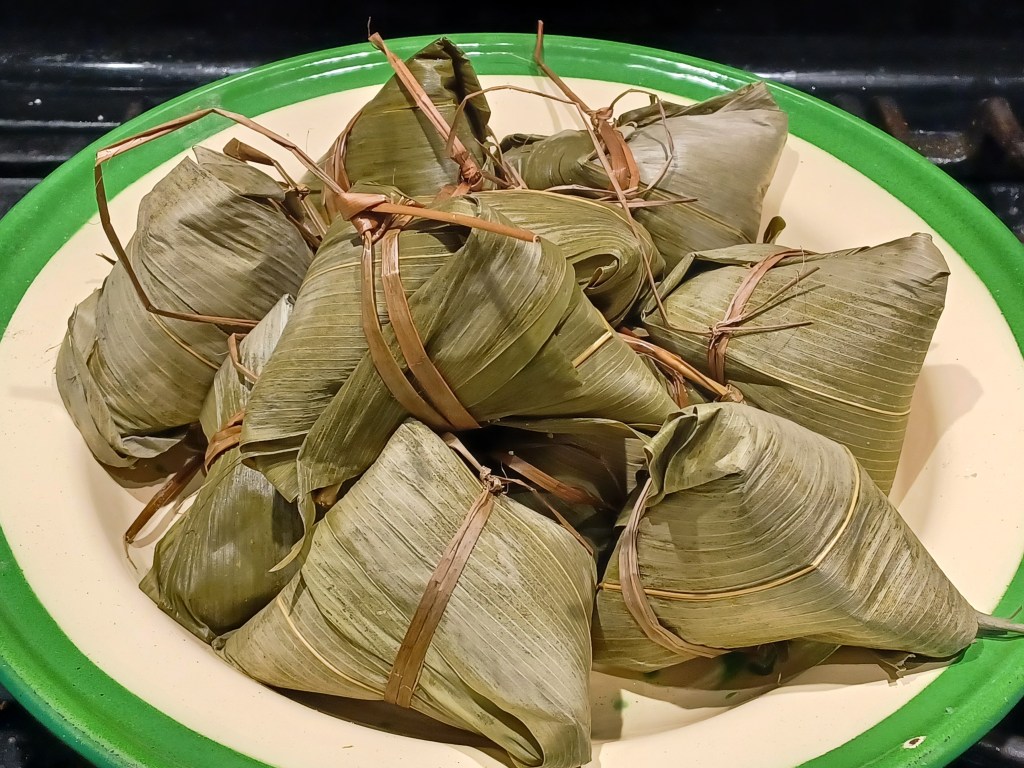
Making Kueh Chang each year reveals a tip that I am gradually remembering from the many years of watching my grandmother make it as I would sit there absorbing all her nuanced moves without me even trying it since I was not capable as a mere toddler. Also, my grandmother, like many Nyonyas like her, did things instinctively without providing explanations. This year, many more memories came back that guided me.
- the initial folding on the cone is made at the 1/3 way point on the leaf side. I initially started at the 1/2 way point but there was not enough leaf flap to create a secure seal. Once I adjusted it, all was fine. Also, use long leaves and not shorter ones.
- when adding the first bit of rice at the bottom of the cone, a deep indentation has to be made in it so as to allow an even distribution of meat stuffing in the corner, or, if not, the bite there will be pure rice which is not desired.
- when adding the stuffing, it is added generously to create a mound, not flat, and away from the side leaves. This ensures that the dumpling has the right rice-to-filling ratio, and the dark stuffing would not be showing on the exterior when cooked.
- when adding the rice to the filling, it is added around the filling first. This ensures that the filling is protected by the surrounding rice, and the flavors are not diluted in the boiling process. Also, make sure any rice clumps are broken up before adding to the leaves.
- before closing the dumpling, the backside of rice touching the leaf flap is pressed down to lower it slightly. I can’t explain why my grandmother did this.
- after folding and closing with the leaf flap, the excess leaf tip is turned towards the side where the initial cone makes a small flap located at the bottom of the cone running up on one side. This way, when tying the dumpling, the wrapping string will wrap both the cone flap and excess leaf flap at the same time to produce a secure package.
- when wrapping the string a couple of times around the chang, pass the loose end on the side closer to the cone top tip to ensure that the wrapping stays in place and doesn’t slip down, which will only create a loosely wrapped dumpling.
- the traditional seagrass string is the best as if you tie it too tight or hard, it will snap. It allows the correct tension as well as a bit of give for expansion when boiling. Using yarn or plastic string only leads to tying too tight or too much tension, creating a “tali pinggang” effect in the final product.
- the excess leaf flap and string have to be cut off for a prettier bundle.
- when boiling, at midpoint, the bottom ones have to come to the top. Extra boiling water is used to top it off when the water level becomes lower than the top chang.
With so many nuances, steps, and honed skill needed to create a food product, I think the art of chang making needs to be submitted for preservation as a cultural intangible.




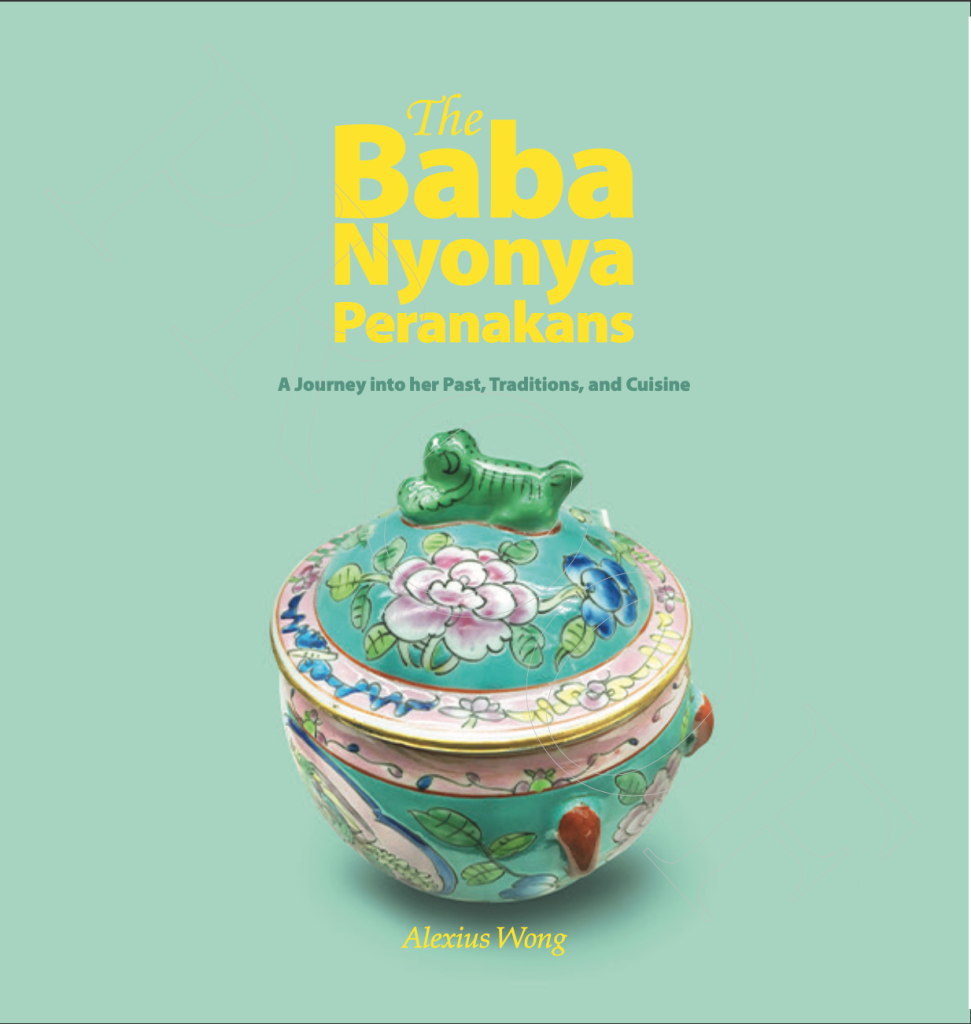
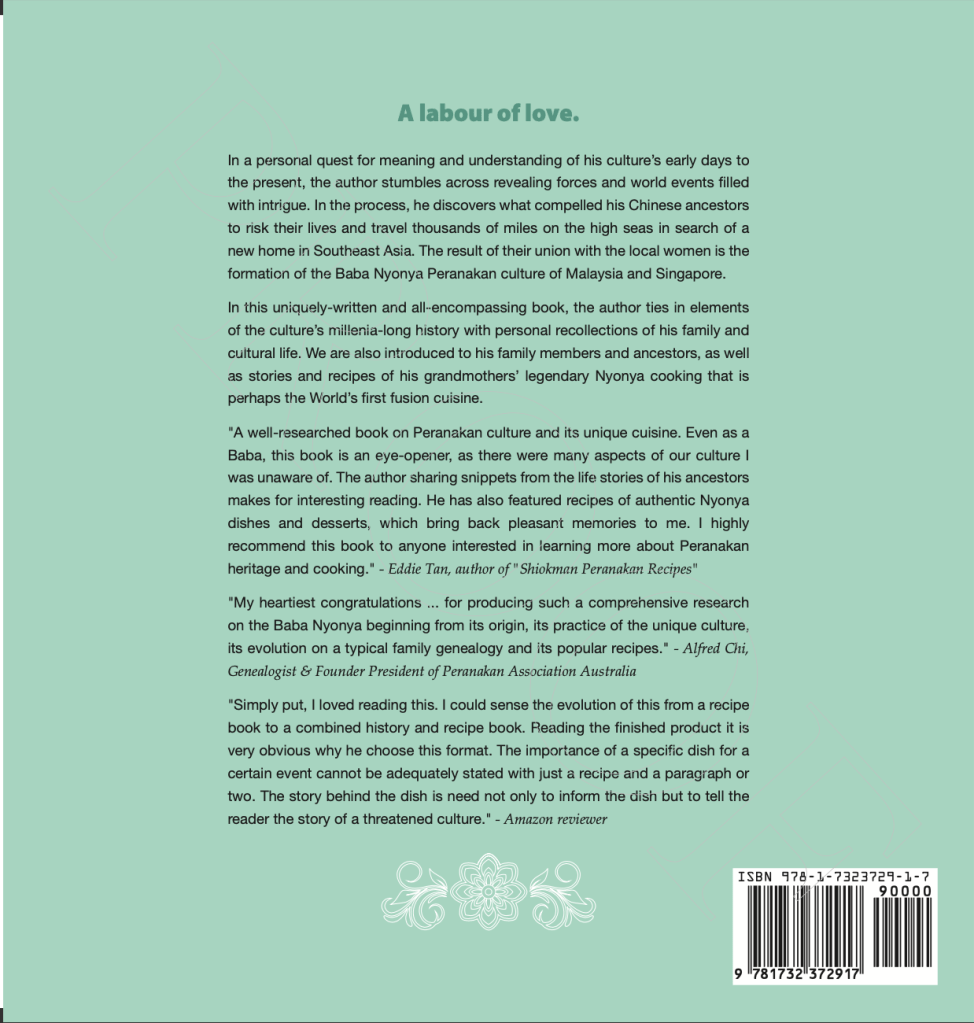


 Baba Nyonya Peranakans