

Finally, I have solved a decades-long dilemma – making Sri Kaya/Coconut Cream Jam in around 30 minutes. Despite my penchant for this irresistible Southeast Asian staple (enjoyed in Malaysia, Singapore, Indonesia and Thailand), I shied from making it the traditional way (recipe found in my first book, The Baba Nyonya Peranakans) as it required the laborious process of stirring the custard mixture in a double boiler for around 2 hours. As a result, this highly-favored spread was prepared by me sadly only once a year.
Recently, I was given a batch by a Malaysian friend living down the road, and it got me thinking why I did not put in the effort into recapturing the flavors that were infused in my grandmother’s version, which I highly favored and have wafted through my day and night dreams of this distant longing. As my Mamah prepared this, I was always the eager very young assistant watching the double boiler on a fire fueled by dried coconut husk smoldering in a shallow pit. Watching her was a masterclass of her “agak-agak” skills, using only her well-honed senses to produce the perfect result. One slip in judgement or fire temperature would spell disaster resulting in sweet scrambled eggs, which I produced a number of times when I started testing her recipe.
Within this large conundrum of this deceivingly simple recipe were many challenges in order to produce a very close version to my grandmother’s. First was the time and labor issue – most people these days are put off by long cooking times and the constant vigilance. Then was the challenge of getting the full pandan flavor within a short period of time without resorting to artificial pandan paste, which carry an undesirable taste and color. Another was how to get the pandan flavor within the short process without it leaving a grassy note. To further shorten the time, I have cut the original recipe down into a quarter, which means a shorter time to cook and set the mixture.
Even though the quantity is a fourth of the original recipe, this method ensures that you have a fresh batch that can be made more often and within 30 minutes. This I much prefer rather than not having any due to dreading its time and labor. I hope you enjoy the recipe and be inspired to make this Nyonya classic spread often and bring it back to your dining room.
Ingredients:
1 pandan leaf, fresh or frozen
¼ cup/ 60 ml coconut milk, canned (thick kind)–do not stir or shake it, or 1st pressing from freshly grated coconut
13 grams + 75 grams granulated white sugar, divided
3 large eggs
Equipment:
Microwave/Microwavable plate
Mortar and Pestle
Small saucepan
Medium saucepan
Medium pot
Fine sieve
Straight-sided spatula, preferably silicon type
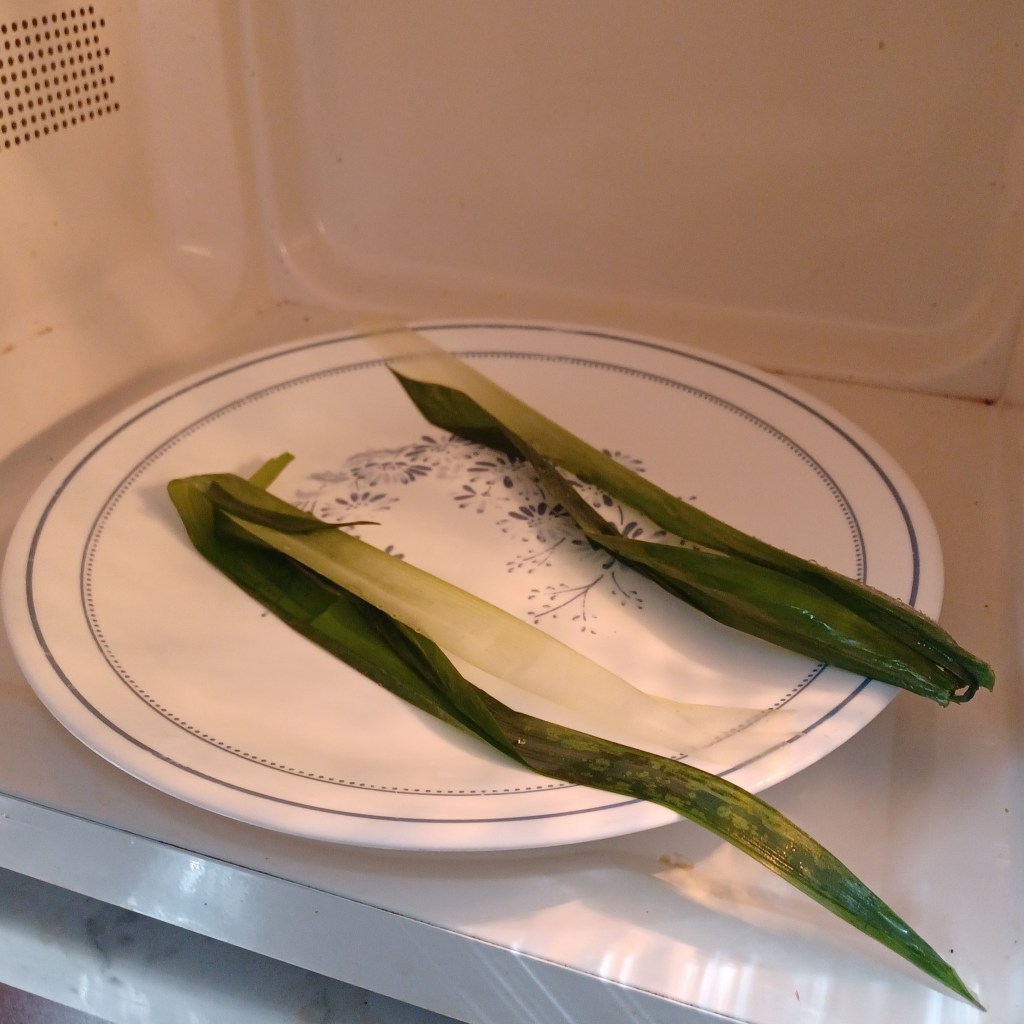
Microwave pandan leaf: If frozen, wash pandan leaf until defrosted.
Place it on a microwaveable plate. Microwave it on high for 30 secs for frozen, or 1 minute or more for fresh leaf until the leaf is wilted.
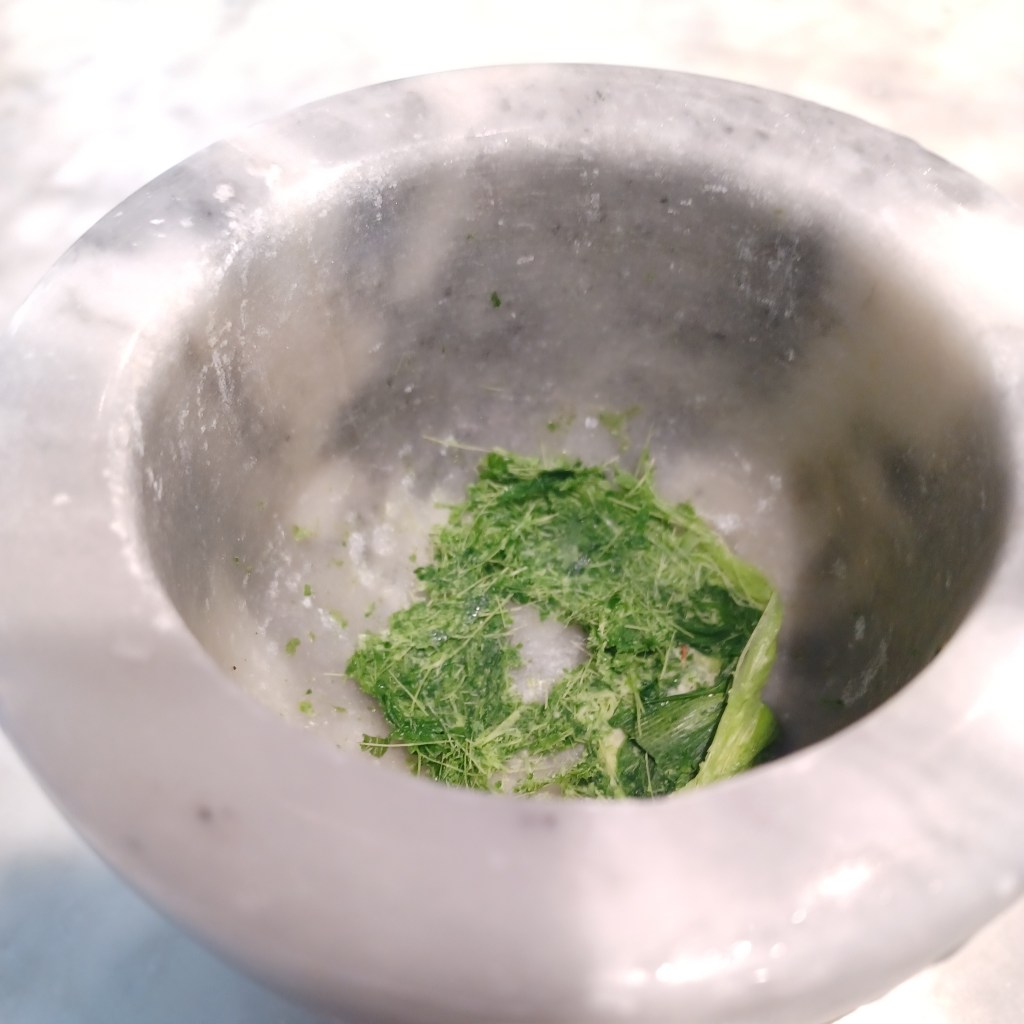
Crush leaf: Using a mortar and pestle, crush the leaf until the fibers are separated [or chop leaf with the coconut milk in a small food processor]. Remove and place it into the small saucepan.
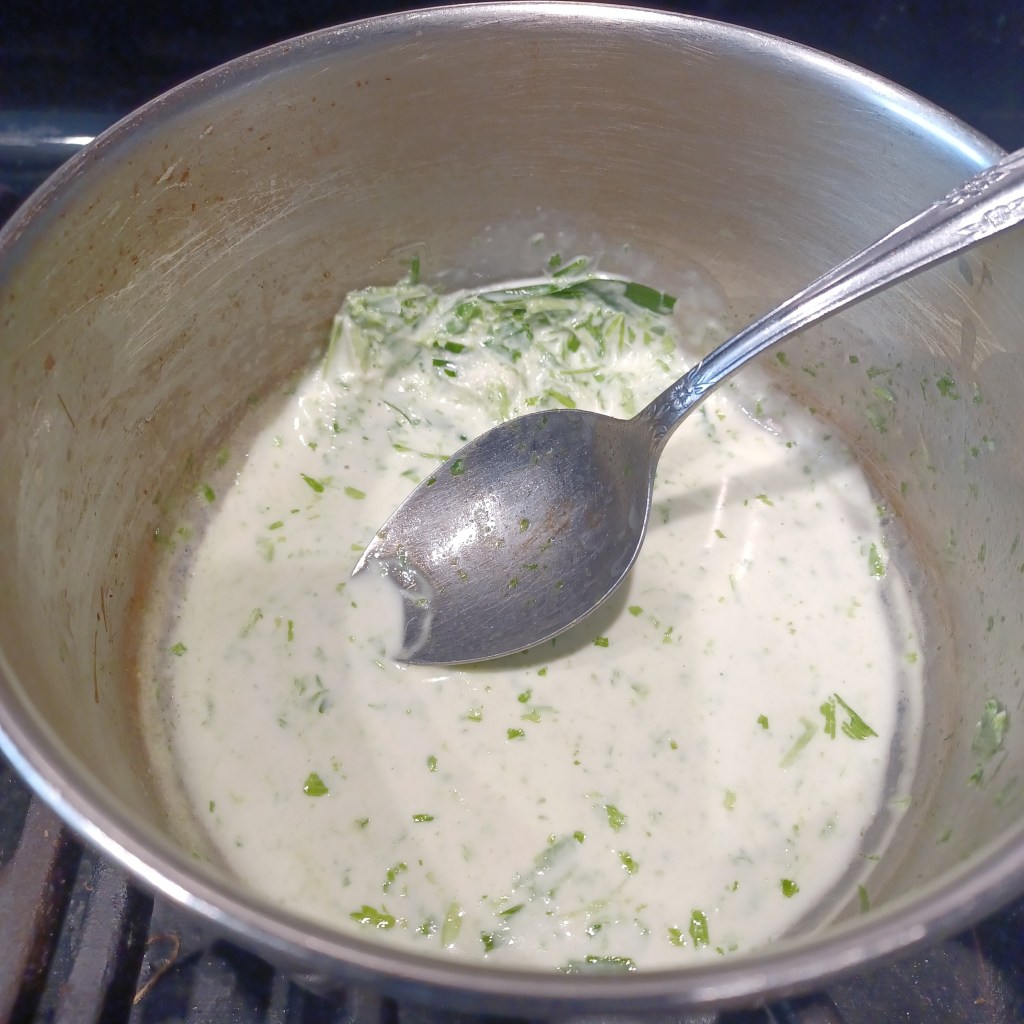
Cook leaf: Scoop the top coconut cream from the can (or fresh 1st pressing) into the saucepan with the leaf. On a small-sized flame on medium heat, bring it to a simmer while using the back of the tablespoon to press the pandan leaf against the sides. Let it only simmer for not more than 1 minute. Turn flame off, cover, and leave it to cool.
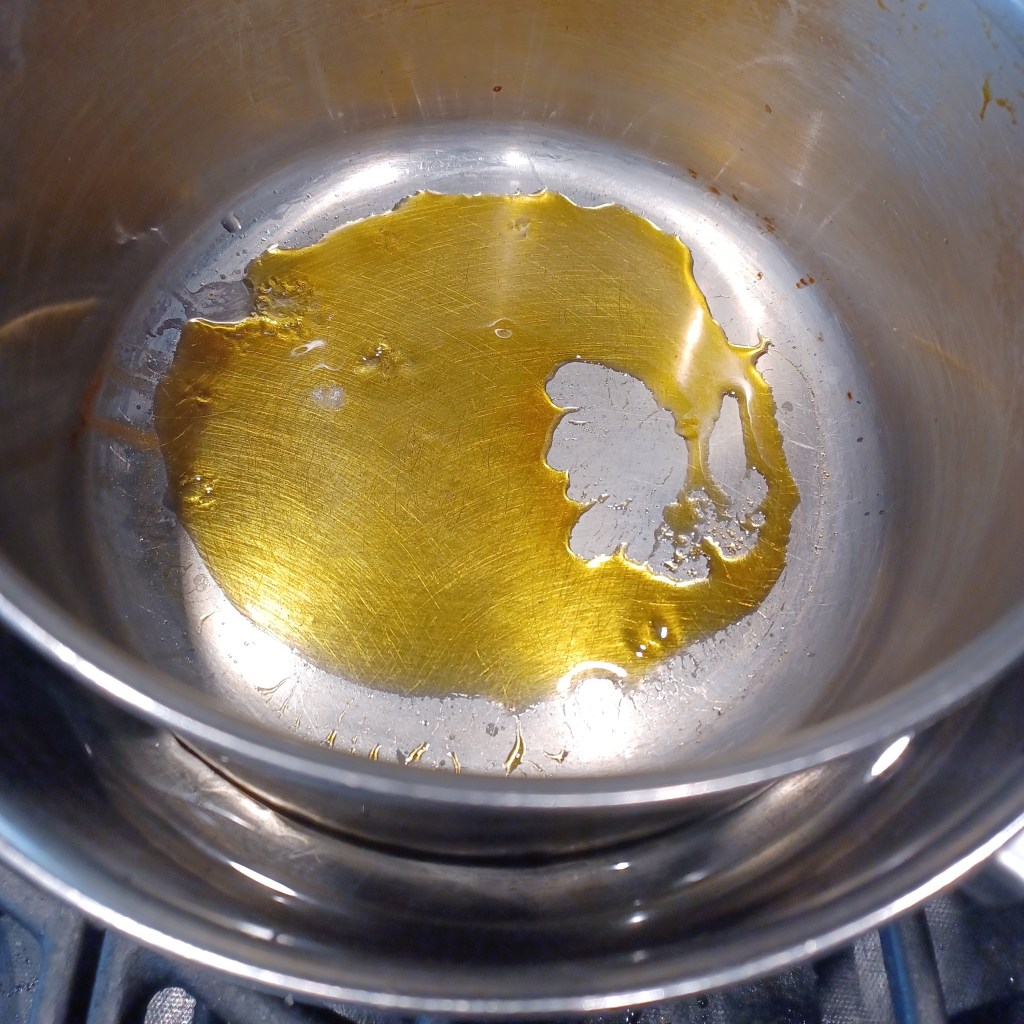
Caramelize sugar: Add the 13 grams sugar into the medium saucepan, and swirl to make sure it is evenly spread out. Place the saucepan on a medium-sized flame on medium heat. Quickly fill up the other medium pot with water until ¼ filled, and place the pot next to the caramel saucepan. Watch the caramelization carefully. You want it to go a blonde or hay color but not past this stage. When the desired color is reached, immediately place the saucepan into the pot of water to stop the cooking. Leave it to cool.
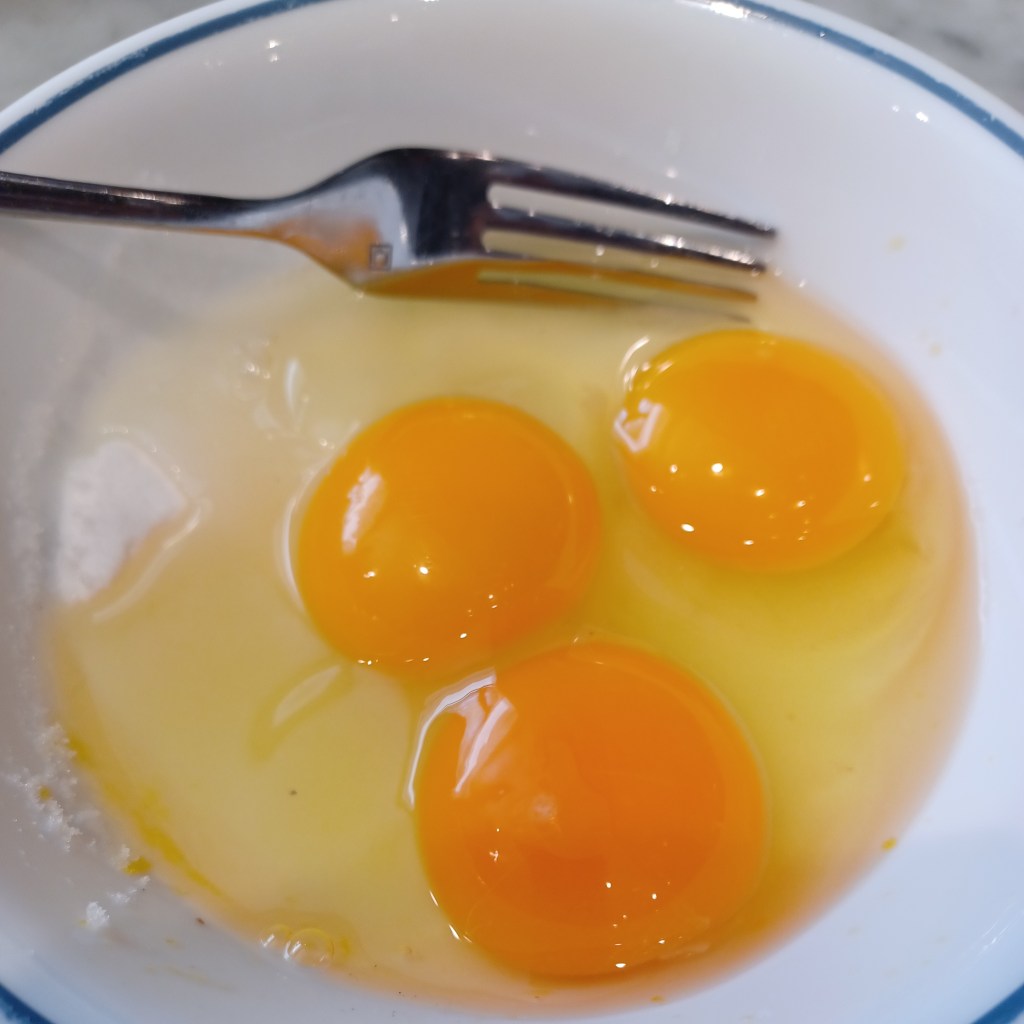
Mix sugar and eggs: In a bowl, add 75 grams of sugar. Break only 2 eggs and add to the sugar. With the 3rd egg, break it and add the whole yolk and only half the egg white. Mix with a fork until the sugar is well incorporated. Set aside.
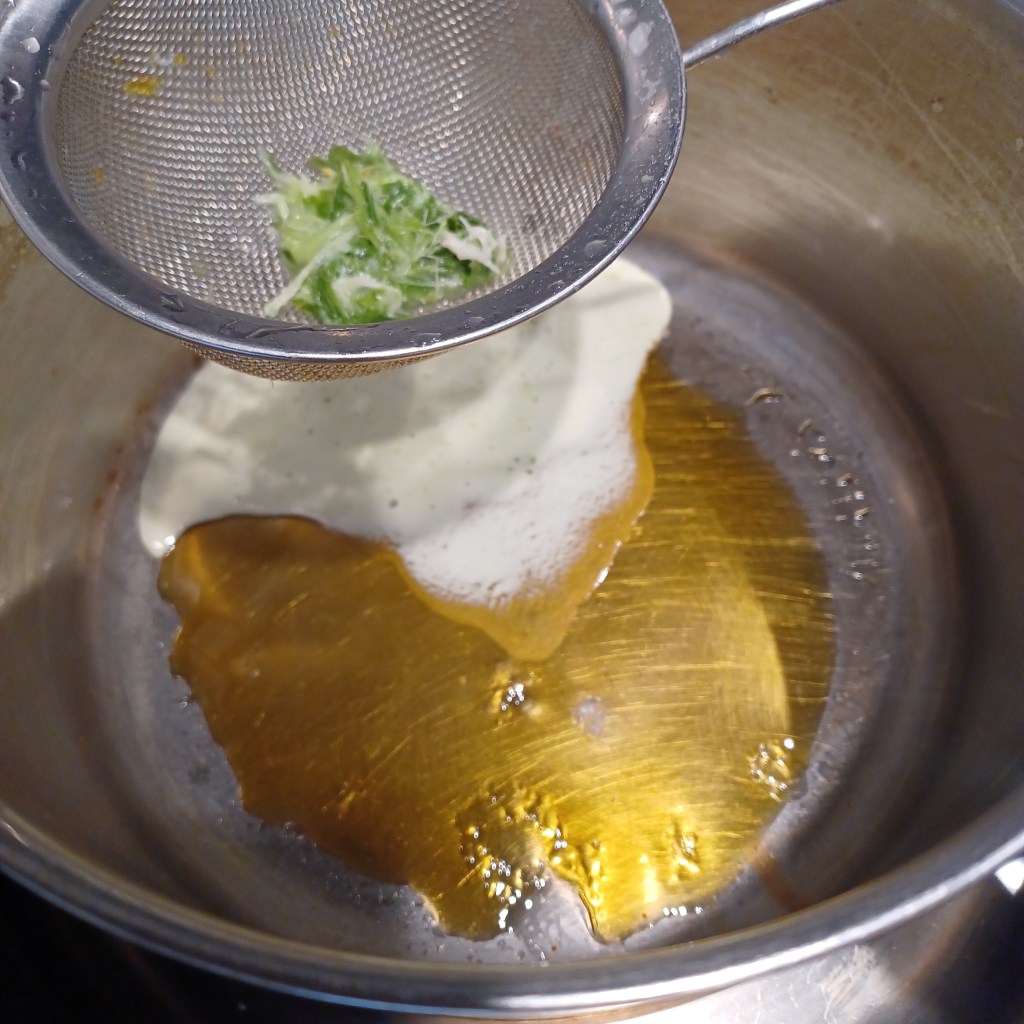
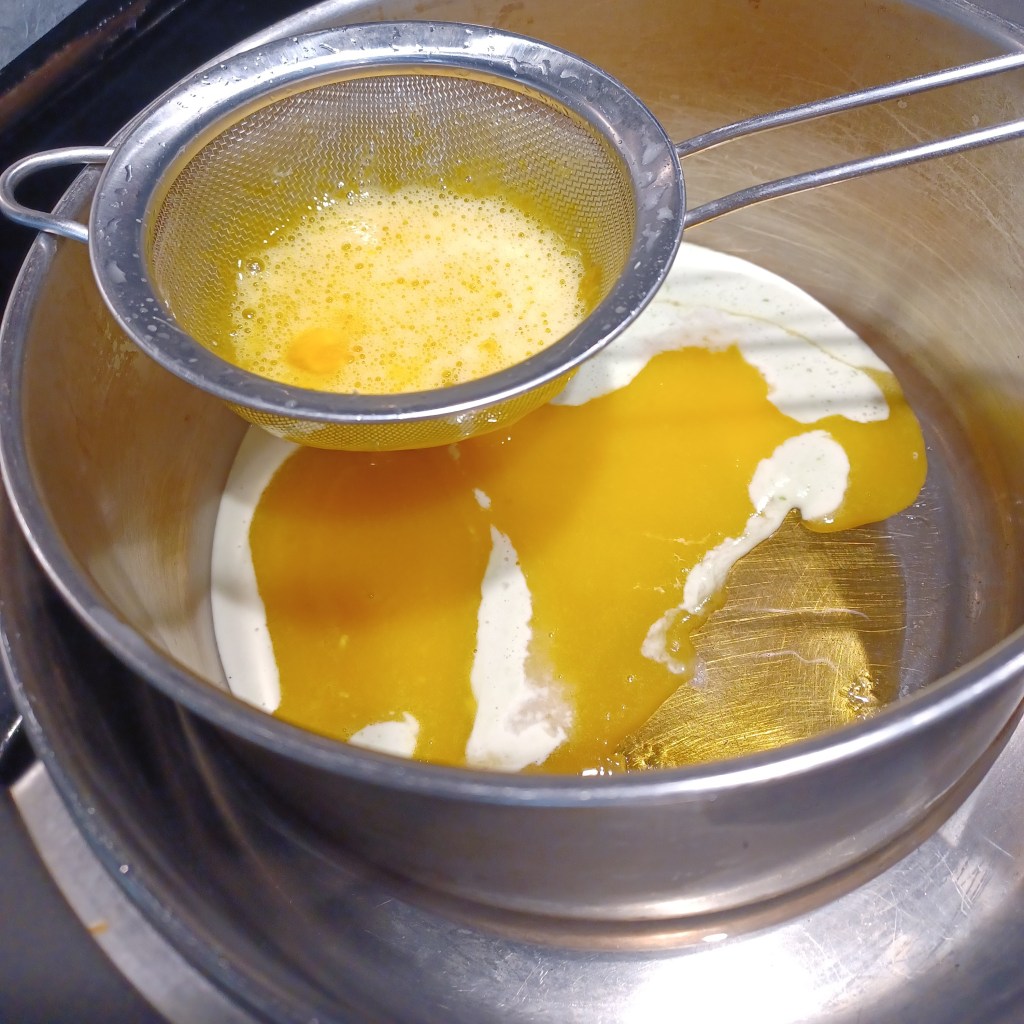
Sieve coconut cream and egg mixture: Into the caramel saucepan, use the sieve and filter the coconut cream while pressing the pandan leaf with a tablespoon – discard the leaf when done and rinse the sieve. Filter the egg mixture into the saucepan – stir inside the sieve with a spoon as well as scrape the bottom of the sieve. Discard any unfiltered egg.
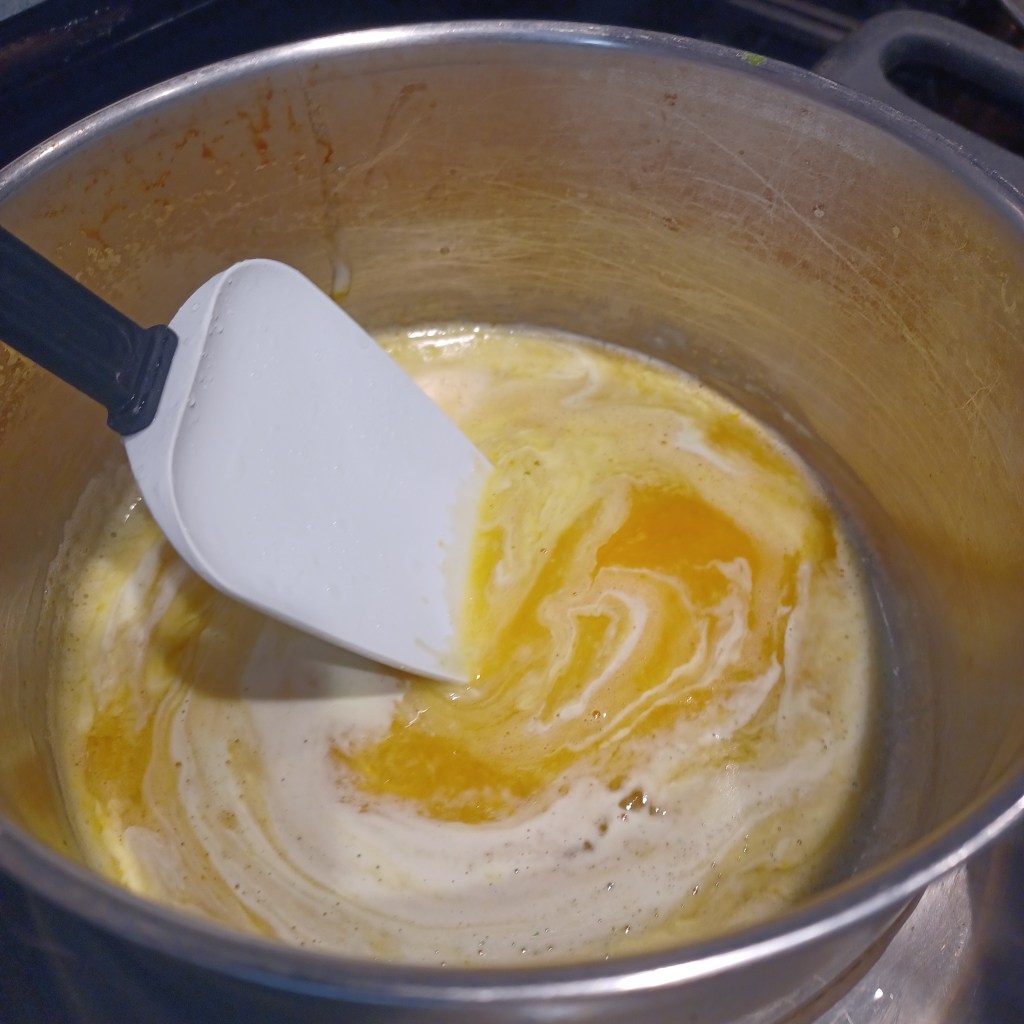
Cook mixture: Make sure enough water comes up the outer sides of the inner saucepan to reach the level of the inside mixture – pour off excess water so the saucepan is stable, or add more water if not enough (you may use a double boiler instead of this). Place the setup on a medium-sized flame on high heat. Using the spatula, scrape the bottom and sides of the mixture pot constantly. Watch the heated water carefully, and when it starts to produce bubbles to indicate boiling, immediately turn down the flame so that barely any bubbles rise.
Continue to cook until the mixture is quite thick but not scrambled – around 10 minutes or more. The final stage is indicated by when you lift up a large amount of the mixture with the spatula, the mixture drips in blobs with a space of 1 to 3-second interval in between, depending on how thick you want it. Or the mixture is heated up to 77C or 170F. When ready, immediately remove the saucepan from the hot water. Pour cooked mixture into a bowl or a glass container (sterilized in boiling water) to cool down. When cooled down, cover and refrigerate immediately – do not cover before cooling as any condensation formed will spoil it.
 Baba Nyonya Peranakans